
Alternatives to Dentures for Missing Teeth
Table of Contents
Why People Seek Alternatives to Dentures
Dental Implants: The Most Permanent Solution
Bone Density and Implant Candidacy
The Implant Timeline and Process
Success Rates and Longevity
Fixed Dental Bridges for Missing Teeth
Cost of Dental Implants vs. Dentures
Upfront Costs by Option
The Hidden Costs of Dentures Over Time
The Long-Term Value of Implants
Bridges: A Middle Ground
Financing and Payment Plans
Implant-Supported Dentures and Bridges Recovery Time
Working with Dental Implant Specialists
Choosing Your Tooth Replacement Option
Frequently Asked Questions
Last Updated: October 3, 2026
Why People Seek Alternatives to Dentures
Dentures have been the standard tooth replacement option for decades, but they come with real frustrations that drive people to explore alternatives to dentures for missing teeth: pain while chewing, constant adjustments, slipping during conversation, and the daily hassle of removal and cleaning. For many, especially seniors in their 60s and 70s, the psychological impact of wearing removable teeth compounds the physical discomfort.
The good news: alternatives to dentures exist and address the core problems denture wearers face, eating without pain, maintaining jawbone structure, and having teeth that feel natural. Understanding your options is the first step toward a decision that fits your life.
The alternatives range from permanent surgical solutions to hybrid approaches that combine stability with flexibility, each with distinct trade-offs in cost, recovery time, durability, and function.
Dental Implants: The Most Permanent Solution
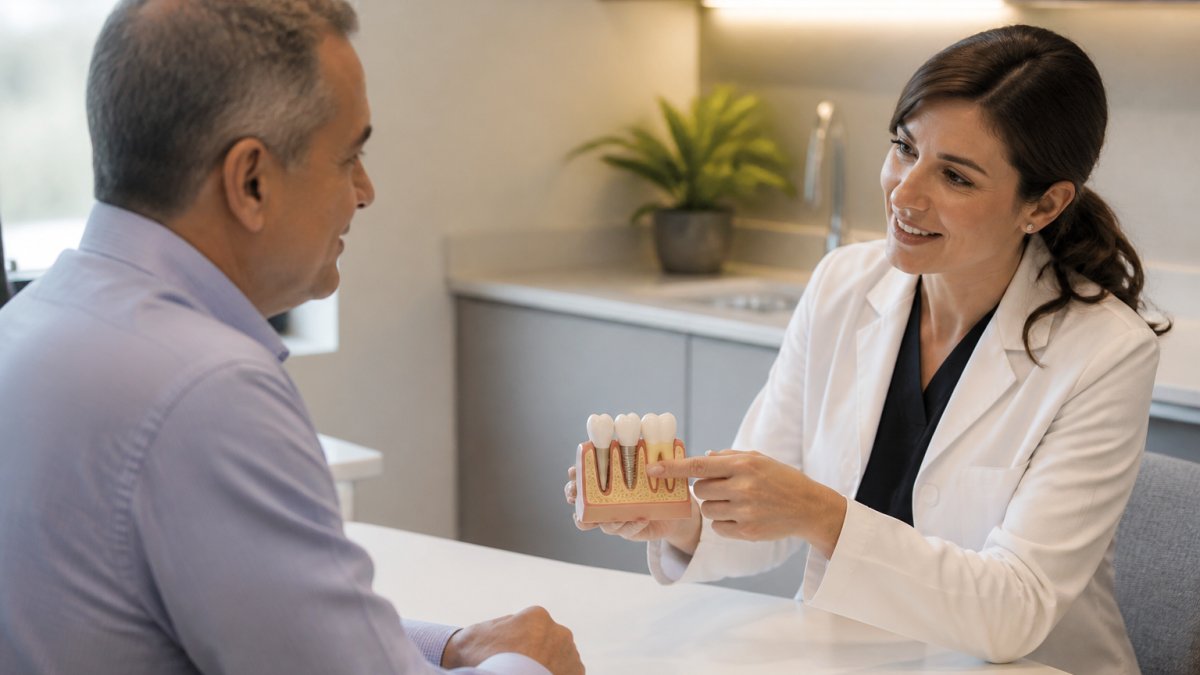
Dental implants are the closest thing modern dentistry offers to replacing a natural tooth. A titanium post is surgically placed into your jawbone and fuses with the bone through osseointegration. Once stable, a crown is attached, creating a tooth that functions independently without relying on adjacent teeth.

Implants prevent bone resorption, the gradual loss of jawbone density that occurs when teeth are missing. This preserves your facial structure and natural appearance, unlike dentures which allow ongoing bone loss.
Bone Density and Implant Candidacy
Not every patient is a candidate for implants without preparation. Your jawbone must have sufficient height and width to anchor the post securely. Years of denture wear can cause significant bone resorption, leaving insufficient bone to support an implant.
Dental specialists use 3D cone beam CT scans to measure bone density before recommending implant placement. If bone is inadequate, two main options exist:
Bone grafting rebuilds lost bone using material from your own jaw, a donor source, or synthetic substitute. The graft integrates over 4-6 months before implant placement, adding $1,500-$3,000 to your timeline but expanding candidacy significantly. Most long-term denture wearers are candidates for implants with bone grafting.
Sinus lift is a specialized bone graft for upper jaw bone loss near the sinuses. The sinus membrane is lifted and bone material placed underneath to create an implant foundation. This requires 4-6 months of healing and adds $2,000-$4,000 but opens implant options for otherwise unsuitable patients.
Patients with severe, widespread bone loss may not be good candidates even with grafting; implant-supported dentures or traditional dentures remain more practical in these cases.
The Implant Timeline and Process
Traditional staged implants take 3-6 months from placement to final crown, though same-day solutions exist for qualified patients.
Traditional timeline: Month 1 (implant placement), Months 2-6 (osseointegration), Month 6 (abutment and crown). Same-day implant solutions compress this into a single appointment for qualified patients with adequate bone density and no grafting needs, though careful patient selection is required.
Success Rates and Longevity
Implant success rates are 95%+ over 10 years, with most lasting 20+ years or a lifetime with proper care (Long term clinical performance of 10 871 dental implants with up to 22 years of follow‐up). Success depends on adequate bone density, good oral hygiene, and avoiding smoking.
Implants require the same maintenance as natural teeth: daily brushing and flossing, regular cleanings, and avoiding grinding or chewing hard objects. Unlike dentures, they need no daily removal, soaking, or adhesives.
Pro Tip If you've worn dentures for years, ask your dental specialist to evaluate your bone density with 3D imaging before assuming you're not a candidate for implants. Bone grafting can often make implants possible, even with significant prior bone loss.
Fixed Dental Bridges for Missing Teeth
A fixed dental bridge is anchored to healthy adjacent teeth, using crowns on neighboring teeth as support with a false tooth (pontic) suspended between them. Once cemented, it feels stable and functions like natural teeth.
Bridges work best for 1-3 consecutive missing teeth with healthy anchoring teeth nearby. They're faster than implants (2-3 weeks) and require no surgery or bone density considerations.
Bridges require irreversible modification of healthy adjacent teeth and don't prevent bone loss beneath the missing tooth, which can affect appearance and fit over time.
Bridges are a solid middle-ground option: more stable than removable dentures, faster than implants, and less expensive than implant-supported solutions.
Cost of Dental Implants vs. Dentures
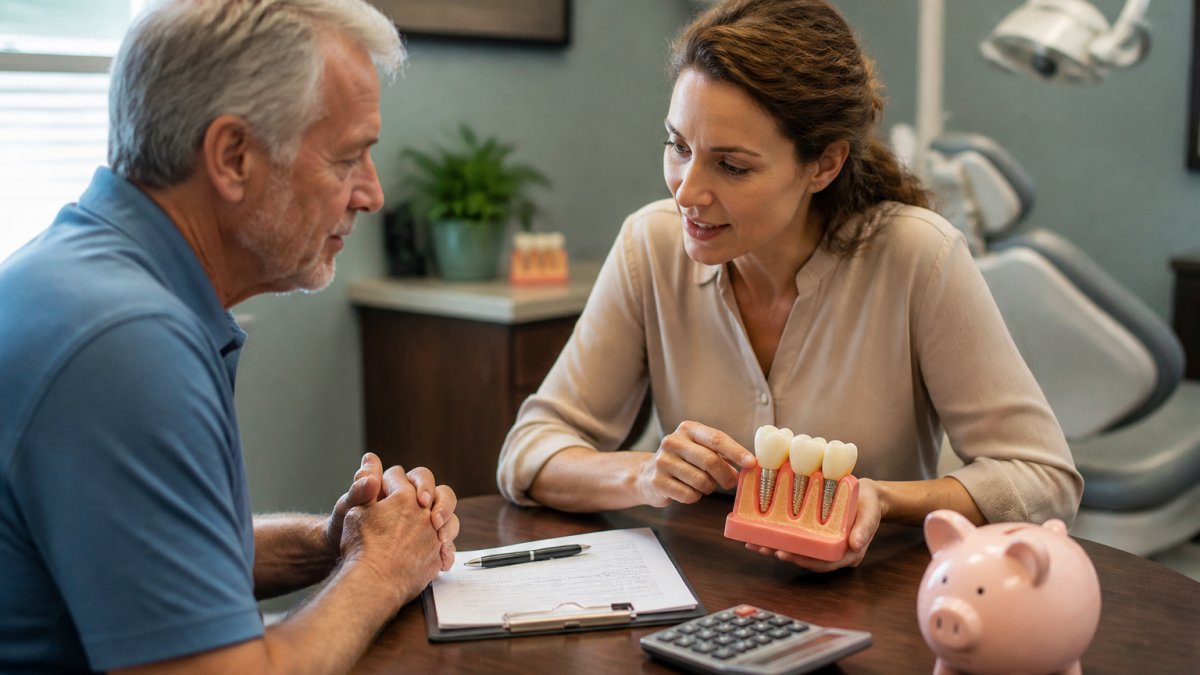
Cost is often the deciding factor when choosing alternatives to dentures for missing teeth. Upfront investment varies significantly, but the real financial picture emerges when you calculate 10-20 year total cost of ownership.
Upfront Costs by Option
Traditional dentures remain the most affordable option initially:
Full denture: $1,000-$3,000 per arch
Partial denture: $500-$2,000
Flexible partial denture: $1,500-$3,500
Fixed dental bridges:
Single-tooth bridge: $2,000-$5,000
Multiple-tooth bridge: $3,000-$8,000 (depending on span and materials)
Single implant with crown: $3,500-$6,500
Multiple implants: $3,500-$6,500 per tooth
Full-mouth implant restoration (8-10 implants): $20,000-$40,000+
Implant-supported dentures:
4-6 implants with denture: $15,000-$30,000
Fixed implant bridge (8-10 implants): $25,000-$50,000+
Bone grafting (if needed before implants):
Minor graft: $1,500-$2,500
Sinus lift: $2,000-$4,000
Extensive grafting: $3,000-$5,000+
The Hidden Costs of Dentures Over Time
Dentures require ongoing maintenance and replacement that most patients underestimate:
Annual adjustments and relines: As jawbone resorbs, dentures become loose. Professional relines cost $300-$500 per year, totaling $6,000-$10,000 over 20 years.
Denture replacements: Dentures last 5-8 years before replacement due to wear or poor fit. A 20-year denture wearer needs 2-4 replacements at $1,000-$3,000 each, totaling $2,000-$12,000.
Adhesives and cleaning supplies: Daily supplies cost $120-$240 per year, or $2,400-$4,800 over 20 years.
Dental visits for adjustments: Denture wearers typically visit 2-4 times yearly for adjustments at $100-$200 per visit, totaling $4,000-$16,000 over 20 years.
Total 20-year denture cost: $15,400-$45,800
The Long-Term Value of Implants
Implants carry higher upfront costs but dramatically lower lifetime costs:
Single implant over 20 years: $6,500-$8,500 (including regular dental visits)
Full-mouth implant restoration over 20 years: $34,000-$38,000 (including regular dental visits)
For patients replacing multiple teeth or a full mouth, implants often cost less over 20 years than dentures despite higher upfront costs.
Bridges: A Middle Ground
Fixed bridges fall between dentures and implants in total cost:
Single bridge over 20 years: $9,000-$12,500 (including eventual replacement)
Financing and Payment Plans
Most dental specialists offer financing options to address upfront implant costs:
Dental payment plans: In-house plans with little to no interest for 12-24 months
Third-party financing: CareCredit and similar cards offer 0% APR periods (6-24 months)
Dental insurance: Most plans don't cover implants but may cover bridges or dentures
Discount plans: Membership plans can reduce costs by 10-60%
Royal Dental at The Villages offers 10% new patient discounts on dental work and implants, with financing options tailored to your situation.
Key Takeaway When comparing costs, look beyond the initial price tag. Calculate your total cost of ownership over 10-20 years, including adjustments, replacements, supplies, and ongoing maintenance. For most patients replacing multiple teeth, implants deliver better long-term value than dentures, even though they cost more upfront.
Implant-Supported Dentures and Bridges Recovery Time
Implant-supported dentures offer a hybrid solution: a denture anchored to implants rather than sitting on your gums. This eliminates adhesives and provides far greater stability than traditional removable dentures.
Implant-supported bridges are fixed permanently, offering greater stability and a more natural feel. Both options require fewer implants than individual tooth replacement, making them practical for full-arch restorations.
Recovery time depends on whether implants are placed in stages or all at once. Traditional staged placement involves surgery and 3-6 months of osseointegration before denture or bridge attachment. Same-day solutions compress this timeline significantly.
Pain and swelling after implant surgery are manageable with prescribed medication and ice. Most patients return to light activities within days and resume normal eating within 1-2 weeks, though diet restrictions apply during healing.
Key Takeaway The recovery experience varies dramatically between traditional staged implants and same-day solutions. Ask your dental implant specialist about your specific timeline and what to expect during healing.
Working with Dental Implant Specialists
Not every dentist places implants or performs complex restorative work. Finding a dental implant specialist with the right experience and technology significantly impacts outcomes, comfort, and speed.
Look for specialists who have placed hundreds or thousands of implants with success in cases similar to yours. Experience with bone grafting, complex anatomy, and 3D cone beam CT scans matters, especially with compromised jawbone density.
Specialists using computer-guided placement, same-day restoration, and IV sedation deliver faster results with less discomfort. If you have dental anxiety, ask about sedation options.
Watch Out Be cautious of specialists who pressure you into treatment or rush you through consultations. A thorough evaluation should include 3D imaging, discussion of your bone density and healing capacity, and realistic timelines. If something feels rushed or unclear, seek a second opinion.
Choosing Your Tooth Replacement Option
Selecting the right alternatives to dentures for missing teeth depends on several factors: how many teeth are missing, your jawbone density, your timeline, your budget, and your lifestyle priorities.
Choose dental implants if: You want the most permanent solution, have adequate jawbone density, can wait 3-6 months for traditional placement (or prefer same-day options), and value long-term durability over initial cost. Implants are ideal for patients who want to restore their natural appearance and function completely.
Choose a fixed bridge if: You're missing 1-3 consecutive teeth, have healthy adjacent teeth to anchor the bridge, want a non-surgical solution, and prefer faster placement than implants. Bridges work well for patients who want stability without surgery.
Choose implant-supported dentures if: You need to replace many teeth, want the stability of implants without the cost of individual implants per tooth, or prefer a solution that can be adjusted or removed if needed. This option balances stability, cost, and flexibility.
Choose flexible partial dentures if: You want the most affordable removable option, have limited bone density, or prefer to avoid surgery. These are more comfortable than traditional rigid dentures but require daily cleaning and eventual replacement.
Option | Best For | Timeline | Invasiveness | Longevity |
Dental Implants | Permanent replacement, single or multiple teeth | 3-6 months (or same-day) | Surgical | 20+ years |
Fixed Bridges | 1-3 consecutive missing teeth | 2-3 weeks | Non-surgical | 10-15 years |
Implant-Supported Dentures | Full or large-gap replacement | 3-6 months (or same-day) | Surgical | 15-20 years |
Flexible Partial Dentures | Affordable removable solution | 1-2 weeks | Non-surgical | 5-8 years |
The decision ultimately comes down to what matters most to you. If eating without pain and maintaining your natural appearance are priorities, implant-based solutions deliver. If you want the fastest, least invasive option, bridges or flexible partials may suit you better. Cost, timeline, and your specific dental anatomy all factor into the equation.
Royal Dental at The Villages can evaluate your situation, discuss realistic outcomes with your specific anatomy, and recommend the option that best matches your goals and circumstances. Our 30 years of experience means we've guided thousands of patients through this exact decision, and we understand the concerns that matter most to you.
If you're tired of the limitations dentures impose on your life, alternatives exist that can restore your confidence, comfort, and ability to eat and speak naturally. Royal Dental at The Villages specializes in same-day implants and full-mouth restorations using advanced technology and personalized care. With our 10% new patient discount on dental work and implants, we make premium solutions more accessible. Schedule a consultation to explore which option is right for you and take the first step toward a smile that feels like your own.
Frequently Asked Questions
What is the most permanent alternative to dentures?
Dental implants are the most permanent tooth replacement option. They are surgically placed into the jawbone and fuse through osseointegration, providing a stable foundation that can last 20+ years or longer with proper care. Unlike dentures, implants don't shift or require daily removal, and they prevent bone loss by stimulating the jawbone naturally.
Are dental implants better than dentures?
Dental implants offer significant advantages over dentures: they provide superior chewing efficiency, eliminate speech clarity issues, feel more natural, and maintain jawbone density. However, implants require sufficient bone density, a longer treatment timeline, and higher initial costs. Your choice depends on your bone health, budget, timeline, and preference for fixed versus removable solutions.
How much do alternatives to dentures cost?
Costs vary widely by option. Your dental implant specialist can provide a personalized quote based on your specific needs and bone structure.
What should I expect during recovery after implant-supported bridges?
Recovery time for implant-supported bridges varies depending on the complexity of your case. Initial healing typically takes 3 to 6 months as the implants osseointegrate with your jawbone. During this period, you may experience mild discomfort and swelling. Your dental implant specialist will provide detailed aftercare instructions, and many patients return to normal eating and speaking within 1 to 2 weeks after the crown placement.
Inquiry Services Page

Comments