
Are Cheap Dental Implants Worth the Risk in 2026?
Last Updated: October 22, 2026
Quick Summary
Cheap dental implants carry higher risk when materials are untested, providers lack expertise, or corners are cut on planning and placement. Success rates around 95-98% in the first five years apply to quality implant systems placed by qualified dentists, but budget implants using lower-grade materials and less experienced providers face higher failure rates from infection, bone loss, and failed integration.
Premium implants cost providers 2-5 times more than generic systems, reflecting real differences in material quality and long-term clinical data.
A cheap implant that fails after seven years requires removal, bone grafting, and replacement, costing $8,000-$15,000 more than the initial savings.
Diagnostic 3D cone beam CT imaging costs $300-$500 and is essential for safe placement; skipping it to save money is a major red flag.
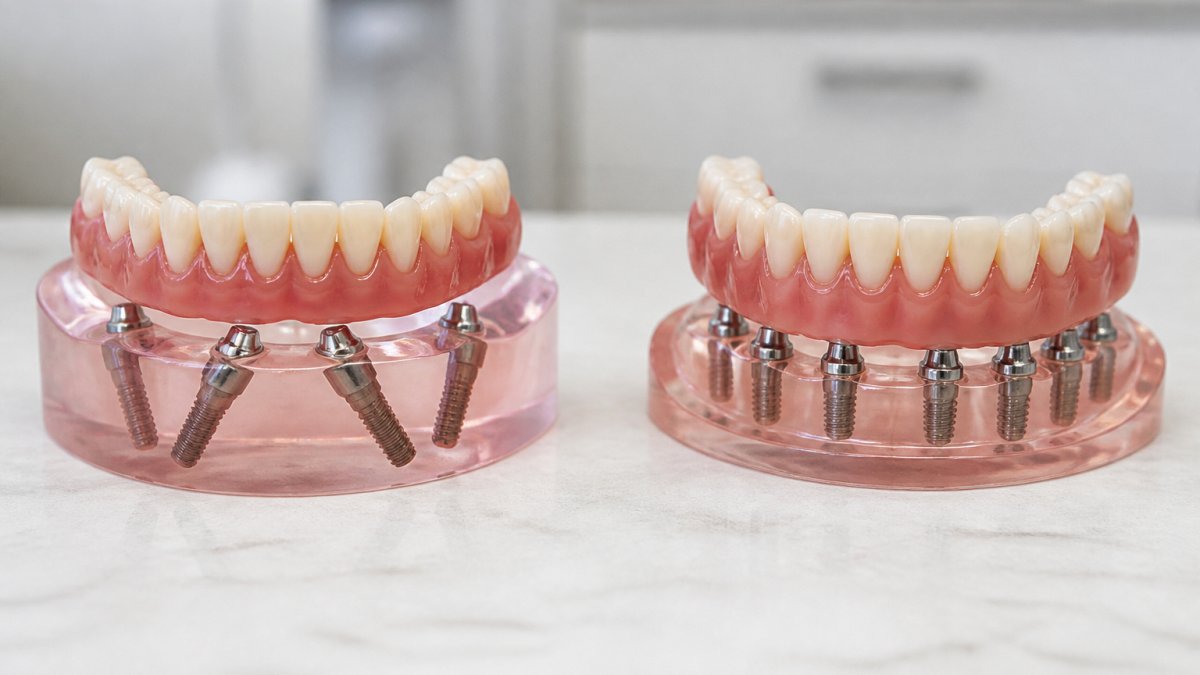
Implant-supported dentures cost $4,000-$8,000 and offer a middle option between traditional dentures and full implant restoration.
Ask providers six key questions about clinician training, implant system, laboratory quality, sterilization, treatment planning, and complication management before deciding.
Table of Contents
What Makes Cheap Dental Implants Different
Dental Implant Risks You Should Understand
How Implant Materials and Durability Affect Long-Term Outcomes
What Is Included in Dental Implant Cost
Dental Implant Financing Options and Alternatives
What dental insurance actually covers
Financing: compare the total cost, not the monthly payment
Lower-cost alternatives and what they trade off
Match the alternative to your health, not just your budget
Signs of a Reputable Dental Implant Provider
1. Clinician training and case volume
2. Implant system and manufacturer support
3. Laboratory and restoration quality
4. Sterilization and surgical environment
5. Treatment planning and imaging
6. Who handles complications, and what does it cost?
Red flags that should end the conversation
Making Your Decision: Is the Risk Worth It?
Frequently Asked Questions
What Makes Cheap Dental Implants Different
Price differences in dental implants can be substantial, but a lower price doesn't automatically mean lower quality. It often reflects differences in materials, provider expertise, and long-term durability.
The difference comes down to three factors: the implant fixture (which anchors into your jawbone), the abutment (the connector), and the crown (what you see). Budget providers may source cheaper components, skip diagnostic imaging, or rush osseointegration.
Leading-brand implants can cost providers 2-5 times more than generic systems, according to Dlight Dental's analysis of implant pricing. That cost difference gets passed along, but it reflects real distinctions in material quality, manufacturing standards, and long-term clinical data. Generic systems may work fine initially; the problem often emerges years later when materials fail or bone integration proves inadequate.
Dental Implant Risks You Should Understand
Implant failure happens, but the actual rate is lower than many patients fear. Research shows success rates around 95-98% in the first five years, with long-term survival often above 90% at 20 years (pubmed.ncbi.nlm.nih.gov). However, these numbers come from quality implant systems placed by qualified dentists. Cheap dental implants carry higher risk when placed by less experienced providers or using materials with limited clinical data.
The most common complications include infection, implant fracture, bone loss around the implant, and failed osseointegration. Implant fracture is rarer with quality materials but more common with budget systems that use softer titanium alloys or inferior manufacturing. Research on risks and complications in dental implant failure identifies these failure modes, though specific rates for low-cost implants aren't well-documented in peer-reviewed literature.
Bone loss around the implant (peri-implantitis) is perhaps the most insidious risk. It can develop silently over months or years, accelerated by poor implant design, suboptimal bone integration, or inadequate follow-up care. By the time you notice a problem, significant damage may have occurred, requiring bone grafts or replacement.
Watch Out A low price from an unlicensed or minimally trained provider carries real risk. Implant placement requires precise surgical technique, proper bone assessment, and sterile conditions. Cutting corners here isn't just uncomfortable, it can result in nerve damage, sinus complications, or permanent bone loss that makes future implants impossible.
How Implant Materials and Durability Affect Long-Term Outcomes
The implant fixture is typically made from titanium or titanium alloy.
The abutment, which connects your fixture to your crown, also varies.
The crown is where cosmetic quality becomes obvious. A well-designed crown matches your natural teeth in color, shape, and translucency; a cheap crown often looks artificial, discolors, or chips easily.
Component | Premium System | Budget System | Long-Term Impact |
Implant fixture | Medical-grade titanium, optimized surface | Lower-grade alloy, minimal processing | Better osseointegration vs. higher failure risk |
Abutment | Custom-milled, precise fit | Standard sizing, loose fit | Reduced infection risk vs. bacterial colonization |
Crown material | Ceramic or zirconia | Composite or low-grade ceramic | Natural appearance and durability vs. discoloration |
Clinical data | 10+ years documented | Limited or anecdotal | Predictable outcomes vs. unknown long-term behavior |
Durability directly affects total cost of ownership. A cheap implant that fails after seven years requires removal, bone grafting, and replacement, easily $8,000-$15,000 more.
Key Takeaway The real cost of a cheap dental implant isn't the upfront price, it's the hidden expense of complications, replacements, and corrective procedures that follow when materials or technique fail.
What Is Included in Dental Implant Cost
A complete implant restoration typically includes five components: diagnostic imaging, surgical planning, implant fixture, abutment, and crown. Some providers bundle these; others charge separately.
Diagnostic imaging (3D cone beam CT scans) costs $300-$500 and is essential for safe placement; skipping it to save money is a major red flag.
When you see "cheap dental implants" advertised at $500-$800 total, something is being cut. Usually it's diagnostic imaging, surgical expertise, or material quality.
Pro Tip Request an itemized quote that breaks down each component separately. Compare not just the total price, but what's included at each stage. A provider unwilling to itemize or who bundles everything into a suspiciously low number is likely cutting corners you can't see.
Dental Implant Financing Options and Alternatives
If cost is your primary concern, explore financing and alternatives before settling for cheap dental implants. The goal is the lowest total cost for a result that lasts, which means understanding what insurance pays, what financing costs, and which alternatives fit your mouth and health.
What dental insurance actually covers
Most dental insurance plans treat implants as a major service or exclude them entirely. A plan may cover part of the crown or extraction but not the fixture or bone graft, and annual maximums (often $1,000-$2,000) can be exhausted by a single implant. Ask your plan three questions: Is the implant a covered benefit? Is there a missing-tooth clause that reduces benefits?
Financing: compare the total cost, not the monthly payment
Many practices offer in-house payment plans, and third-party financing such as CareCredit is widely accepted. The monthly payment isn't the number that matters, the total cost is. Ask for the APR, term length, and any origination or late fees. A 0% promotional plan that reverts to a high rate can cost more than a lower-rate plan with a longer term.
Pro Tip Ask each provider for the cash price, the financed total at their best available rate, and the total if you pay in full at the start of treatment. Comparing those three numbers across two or three offices tells you more than comparing monthly payments.
Lower-cost alternatives and what they trade off
Alternatives to implants exist and deserve honest consideration.
Dentures remain the lowest-cost option, typically $1,000-$3,000 for a full set.
Bridges work well for one or two adjacent teeth when neighbors are healthy enough to support them. Cost is commonly $2,000-$5,000 per tooth, and the procedure requires grinding down healthy neighboring teeth, a permanent trade-off. Bridges typically last 10-15 years.
Implant-supported dentures combine implants with denture stability. Two to four implants hold a denture securely, reducing slipping and improving comfort.
Dental schools and community clinics offer implant treatment at reduced cost because supervised residents provide care.
Staged treatment is another option: place the implant now and defer the crown, or complete bone grafting first and place the implant months later.
Match the alternative to your health, not just your budget
Your health affects which option is realistic. Smoking, uncontrolled diabetes, gum disease, low bone volume, and certain medications (such as bisphosphonates) raise implant failure risk and may make a bridge or denture more prudent. Conversely, a healthy patient with good bone volume may find a quality implant, financed over time, costs less over 20 years than replacing a bridge twice.
Watch Out Be cautious of any provider who presents only one option or implies that the cheapest path is always unsafe. The honest answer is usually that the best option depends on your case, and a provider who will not discuss alternatives is not giving you the information you need to decide.
Signs of a Reputable Dental Implant Provider
Choosing the right provider matters more than choosing the cheapest option. Most articles tell you to look for credentials and technology, true but not actionable.

Use this checklist during your consultation. Ask each question directly and write down the answers so you can compare providers side by side.
1. Clinician training and case volume
Ask: Who will place the implant, and what formal implant training have they completed? How many implants have they placed in the last 12 months? Do they handle complex cases in-house or refer them? High-volume dentists have solved more problems than those placing a few per year. Accredited training and membership in organizations such as the American Academy of Implant Dentistry are reasonable signals, but case volume and complication management matter more.
2. Implant system and manufacturer support
Ask: Which implant system will you use, and why? Is it branded with published long-term clinical data, or generic with limited documentation? Can the manufacturer supply replacement parts years from now? If the implant fails or a component breaks, a discontinued or obscure system can make repair difficult or impossible. A provider who can't name the system is a red flag.
3. Laboratory and restoration quality
Ask: Which dental laboratory fabricates the crown and abutment? Is it a local or domestic lab with a consistent technician, or offshore with variable quality control? Custom-milled abutments fit more precisely than stock components, and precision affects how well the restoration seals against bacteria. Ask to see examples of their implant restorations.
4. Sterilization and surgical environment
Ask: What sterilization protocols do you follow, and can I see the sterilization area? Implant placement is a surgical procedure. Sterile technique, proper autoclave maintenance, and a dedicated surgical space reduce infection risk. A provider who is evasive about sterilization is not worth the savings.
5. Treatment planning and imaging
Ask: Will you take a 3D cone beam CT scan before planning? How do you assess bone quality and density? Do you use digital surgical planning or a guided template? Skipping 3D imaging is one of the most common ways a low-cost provider cuts corners, and it increases the risk of nerve injury, sinus complications, and poor implant positioning.
6. Who handles complications, and what does it cost?
Ask: If the implant fails or I develop peri-implantitis, who manages that, and what will it cost me? Is there a warranty, and does it cover the fixture, the crown, or both? How many follow-up visits are included? A reputable provider stands behind the work and explains financial responsibility for complications before treatment begins.
Pro Tip Bring this checklist to every consultation and ask the same questions at each office. Comparing answers side by side reveals more than comparing advertised prices, because the provider who answers all six clearly is usually the one who has built a system around doing the work properly.
Red flags that should end the conversation
A total price quoted before any imaging or examination.
Refusal to itemize components or explain what is included.
Pressure to decide the same day, or discounts that expire quickly.
A lower price is not automatically a warning sign. A lower price with vague answers to these questions is.
Making Your Decision: Is the Risk Worth It?
Here's a framework for deciding:
Ask yourself: Will this implant restore function and appearance for 15+ years? Is the provider qualified and transparent? Are all components specified and itemized? Do I understand the risks and alternatives?
Get a second opinion. Consultation is usually free or low-cost.
Consider total cost of ownership. Don't compare just the upfront price. Factor in complications, replacements, and corrective procedures.
Evaluate your bone quality. If you have significant bone loss, cheap implants are riskier because they're less likely to integrate well.
Think about your age and health. If you're healthy and expect to live another 20+ years, investing in quality makes sense.
Cheap dental implants aren't automatically bad, but they carry higher risk when materials are untested, providers lack expertise, or corners are cut on planning and placement. If you're weighing your options, we offer a 10% discount for new patients on implants and restorations. Schedule a consultation with Royal Dental at The Villages to discuss your specific situation and get a transparent, itemized treatment plan you can compare with other quotes.
Frequently Asked Questions
What is the real success rate of cheap dental implants compared to premium options?
Dental implants overall show success rates of 95-98% in the first five years, with long-term survival often above 90% at 20 years. However, these rates reflect quality implants placed by qualified providers. Low-cost implants may use inferior materials or be placed by less experienced practitioners, which can increase failure risk. The price difference between implant systems can be 2-5 times higher for leading brands, reflecting differences in material quality and research backing, though lower price alone does not guarantee poor outcomes.
What are the main risks of getting low-cost dental implants?
Cheap dental implants carry several risks, including implant failure due to poor osseointegration (bone integration), fracture or breakage of the implant restoration, infection at the implant site, material degradation over time, and complications requiring corrective procedures or replacement. These risks increase when implants use substandard materials, lack proper diagnostic imaging before placement, or are placed by providers without adequate training or experience. Choosing a qualified dentist and understanding the full treatment plan helps reduce these dangers.
How can I tell if a dental implant provider is reputable and qualified?
A reputable dental implant provider should have relevant credentials or specialist training, use advanced diagnostic imaging (CBCT scans), conduct thorough patient candidacy assessment, explain the complete treatment plan and timeline, provide itemized cost estimates, offer follow-up care and maintenance, and be transparent about risks and complications. Ask about their implant success rates, whether they handle complications in-house, and request before-and-after cases similar to your needs. Avoid providers who rush the process or avoid discussing potential risks.
What should I ask about before accepting a cheap dental implant quote?
Request an itemized estimate that breaks down implant fixture costs, abutment costs, crown or restoration costs, bone graft (if needed), diagnostic imaging, anesthesia, and follow-up care. Ask about the implant brand and material specifications, the provider's experience with similar cases, their implant failure rate, what happens if the implant fails, whether they offer financing or payment plans, and what is covered by any warranty. Clarify the total cost of treatment, not just the implant component, and get the estimate in writing to compare providers fairly.
Inquiry Services Page
Add royaldentalthevillages.com as a preferred source on Google →


Comments