
Best Cosmetic Dentistry for Seniors 2026
Table of Contents
Top Cosmetic Dentistry Options for Seniors Dental Implants for Single Teeth and Full-Arch Restoration Porcelain Veneers and Dental Bonding Professional Teeth Whitening Implant-Supported and Traditional Dentures
Dental Implants for Single Teeth and Full-Arch Restoration
Porcelain Veneers and Dental Bonding
Professional Teeth Whitening
Implant-Supported and Traditional Dentures
Best Dental Implants for Seniors: What You Need to Know How Implants Address Age-Related Bone Density Same-Day Implants: Speed Meets Safety
How Implants Address Age-Related Bone Density
Same-Day Implants: Speed Meets Safety
Full-Mouth Restoration for Seniors: Comprehensive Smile Recovery When Full Restoration Becomes Necessary Recovery Time and Long-Term Durability
When Full Restoration Becomes Necessary
Recovery Time and Long-Term Durability
Cosmetic Dentistry Cost for Seniors: Financing and Insurance Understanding Out-of-Pocket Expenses Payment Plans and Financing Options
Understanding Out-of-Pocket Expenses
Payment Plans and Financing Options
Comfort and Safety: Sedation Dentistry for Anxious Patients
Gum Health and Periodontal Considerations for Seniors
Maintaining Your Cosmetic Dental Work Long-Term
Conclusion
Last Updated: August 27, 2026
Top Cosmetic Dentistry Options for Seniors
Many seniors discover that cosmetic dentistry restores function, comfort, and quality of life beyond vanity. Whether dealing with staining, wear, or missing teeth, the best cosmetic dentistry for seniors 2026 has evolved dramatically.
At Royal Dental at The Villages, we've spent over 30 years helping seniors reclaim their smiles with advanced techniques that account for age-related bone density changes, medication interactions, and specific comfort needs. Options range from minimally invasive enhancements to comprehensive full-mouth restorations completed in a single day.
Not all cosmetic dental solutions work equally well for seniors. Your bone structure, healing capacity, and maintenance needs differ from younger patients. This guide breaks down the best options available and how to separate marketing hype from clinical reality.
Dental Implants for Single Teeth and Full-Arch Restoration
A dental implant replaces a missing tooth by surgically placing a titanium post into the jawbone, then anchoring a custom crown to it. For seniors, implants are the gold standard because they're the only solution that prevents bone loss, critical as we age.
Single-tooth implants work best when missing one or two teeth with healthy surrounding bone. The procedure involves placing the implant post, waiting for osseointegration (bone fusing to the implant), and attaching the crown. For most seniors, this takes four to six months (peer-reviewed research).
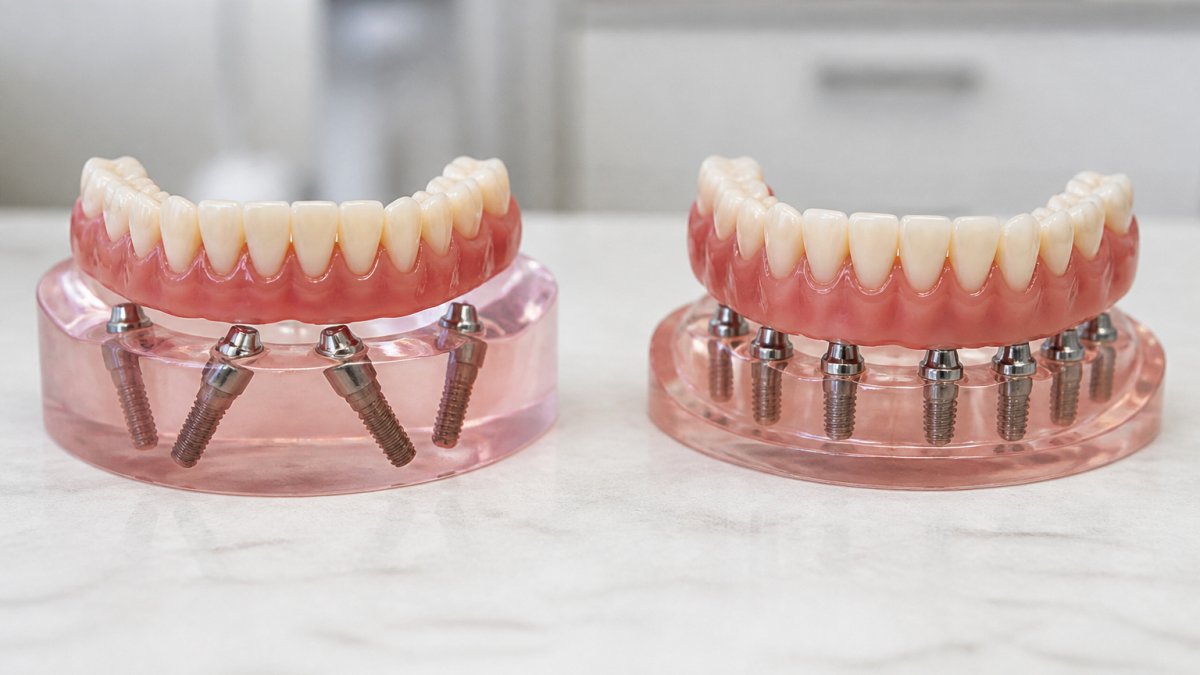
Full-arch implants (All-on-4 or All-on-6) replace an entire upper or lower set of teeth using four to six implant posts. This is transformative for seniors who've worn uncomfortable dentures for years, providing fixed bridges that function like natural teeth instead of slipping dentures requiring adhesives.
The key advantage: implants preserve jawbone structure. Traditional dentures sit on shrinking bone, fitting worse over time. Implants stimulate bone, keeping facial structure intact and preventing the sunken appearance from untreated tooth loss.
Porcelain Veneers and Dental Bonding
Porcelain veneers are thin shells bonded to tooth fronts, ideal for discoloration that whitening won't fix, minor chips, or slight gaps. Veneers resist staining far better than natural enamel.
Dental bonding uses tooth-colored composite resin for similar issues. It's faster and less expensive than veneers but lasts three to ten years compared to ten to fifteen for porcelain. Bonding works for quick fixes; veneers are the long-term investment (the American Dental Association).
The trade-off: veneers require removing a thin enamel layer, which is irreversible. For seniors with thinning enamel, this matters. Bonding preserves more tooth structure, though it's more prone to chipping and staining.
Professional Teeth Whitening
Professional whitening removes years of staining from coffee, tea, wine, and tobacco. In-office treatments use stronger bleaching agents under professional supervision, delivering dramatic results in one session.
Many seniors find whitening alone transforms their appearance. A brighter smile reads as younger and healthier. Results typically last six months to a year with proper maintenance (the American Academy of Dermatology).
Sensitivity is the main concern for older patients. If you have gum recession or thin enamel, whitening can cause temporary discomfort. Your dentist can manage this with desensitizing treatments.
Implant-Supported and Traditional Dentures
Implant-supported dentures snap onto two to four implants, providing stability of implants with removability of dentures. This is the middle ground for seniors wanting better function than traditional dentures but not ready for fixed implant costs.
Traditional full and partial dentures remain practical, especially if bone loss is too severe for implants or budget is limiting. Modern dentures fit better and look more natural than a decade ago, though they require adhesive, nightly soaking, and periodic adjustments.
Dentures work, but they're not ideal long-term. They make eating harder, affect taste and speech, and require constant maintenance. If you can afford implants, they're worth the investment.
Best Dental Implants for Seniors: What You Need to Know
Dental implants are closest to replacing natural teeth, but success depends on factors specific to aging. Your bone density, overall health, and medications influence whether implants integrate properly and last decades.

How Implants Address Age-Related Bone Density
As you age, your jawbone loses density, especially pronounced if you've worn dentures for years. The bone underneath shrinks because it's not stimulated. This creates a challenge for implants, which require sufficient bone to anchor securely.
The solution is bone density evaluation before implant placement. Your dentist uses 3D imaging to measure bone thickness and height. If density is borderline, bone grafting can rebuild the area, adding time and cost but dramatically improving success rates.
Implant success rates for seniors are actually comparable to younger patients when bone density is adequate. The issue isn't age itself; it's bone loss that often accompanies aging. A healthy 75-year-old with good bone density has better implant outcomes than a 45-year-old with severe bone loss from denture wear.
Your healing capacity does slow slightly with age, so implant integration might take six months instead of four. But this isn't a barrier, just a timeline consideration.
Same-Day Implants: Speed Meets Safety
Same-day implants place the implant post and attach a temporary crown in a single appointment. For seniors tired of waiting months, this sounds ideal. But it requires specific conditions to work safely.
Same-day implants work best when bone density is excellent and the tooth being replaced is in the front of your mouth (lower stress zone). Back teeth handle more chewing force, so they typically need the traditional four-to-six-month healing period.
The real advantage for your age group: faster function means eating normally and speaking clearly sooner. The temporary crown looks natural, so you're not self-conscious during healing.
Royal Dental at The Villages offers same-day implants for qualifying cases, with the same success rates as traditional placement. The key is honest assessment of whether your bone density supports it.
Full-Mouth Restoration for Seniors: Comprehensive Smile Recovery
Full-mouth restoration combines multiple procedures, implants, crowns, veneers, gum work, into a coordinated treatment plan. It's the solution when dealing with widespread damage: multiple missing teeth, severe wear, gum disease, and bite problems.
This addresses function first, then aesthetics. You can't chew properly with failing teeth, affecting nutrition and quality of life. Comprehensive restoration fixes the foundation.
When Full Restoration Becomes Necessary
You're a candidate if you have several issues: multiple missing teeth, severe enamel erosion, gum disease, bite misalignment causing jaw pain, or teeth so damaged that crowning each one makes more sense than extraction.
The process starts with a detailed treatment plan mapping which teeth can be saved, which need extraction, and what replacement strategy makes sense given your bone density, budget, and maintenance capacity.
Many seniors find full restoration eliminates years of piecemeal dental work with different dentists and specialists. One comprehensive plan coordinated by a single practice is simpler and often more cost-effective.
Recovery Time and Long-Term Durability
Full-mouth restoration typically spans three to six months, depending on complexity. If bone grafting is needed, add another three months. You're not waiting in the dark, your dentist provides temporary solutions so you can function normally during treatment.
Long-term durability depends on materials used and your maintenance commitment. Implant-supported restorations with porcelain crowns last fifteen to twenty years or longer. Traditional dentures need replacement every five to eight years as bone changes.
Fixed implants require the same care as natural teeth: brushing, flossing, regular checkups. Removable dentures need nightly cleaning, storage, and periodic adjustments. For seniors wanting simplicity, implants win.
Cosmetic Dentistry Cost for Seniors: Financing and Insurance
Cost is the barrier stopping most seniors from pursuing cosmetic dentistry. But the financial picture is more nuanced than sticker price suggests.
Understanding Out-of-Pocket Expenses
For actual costs specific to your situation, contact Royal Dental at The Villages for a consultation and quote. Pricing depends on bone density, number of teeth involved, materials chosen, and whether bone grafting is needed.
Some procedures have functional components that insurance may cover. If an implant replaces a missing tooth affecting chewing or speech, insurance might cover a portion. Gum disease treatment is sometimes covered if classified as periodontal therapy. Always ask which costs might qualify for insurance assistance.
Payment Plans and Financing Options
Most dental practices, including Royal Dental at The Villages, offer payment plans breaking large costs into monthly installments.
CareCredit is a healthcare credit card accepted at most dental offices, offering promotional financing, often zero interest for six to twelve months on purchases over $200. After the promotional period, interest rates can be high, so it's a tool for managing timing.
Royal Dental at The Villages provides a 10% new patient discount on dental work and implants, reducing total cost before financing.
Medicare doesn't cover routine dental work, but some Medicare Advantage plans include dental benefits. Dental discount plans offer percentage discounts at participating dentists, reducing costs by 10-20%.
Comfort and Safety: Sedation Dentistry for Anxious Patients
Dental anxiety is real and worse for seniors with bad experiences or years of avoidance. Sedation dentistry removes that barrier, allowing necessary work without panic.

Sedation options range from mild (nitrous oxide) to moderate (oral sedation) to deep (IV sedation). IV sedation is the strongest, leaving you deeply relaxed and unaware of the procedure.
For seniors, IV sedation requires careful medical evaluation. Your dentist needs to know about all medications, heart conditions, and breathing issues. When done properly, it's safe even for older patients with health concerns.
Under sedation, your dentist can complete more work in fewer appointments. A full-mouth restoration requiring six appointments might be done in two or three under IV sedation, reducing total treatment time.
Gum Health and Periodontal Considerations for Seniors
Healthy gums are the foundation for any cosmetic work. Beautiful implants or veneers fail if gums are diseased.
Periodontal disease is common in seniors because gum disease accumulates over decades. Bacteria under the gum line erode bone, destabilizing teeth and implants. Early stages are painless, so many seniors don't realize they have it.
Before any cosmetic work, your dentist should evaluate gum health. If disease is present, it needs treatment first through deep cleaning, antibacterial rinses, or gum grafting.
Implants fail when gum disease is present. The infection spreads to the implant site, causing bone loss and implant failure. Gum health evaluation and treatment are prerequisites for implant success.
Gum contouring reshapes uneven gums or those covering too much tooth, improving aesthetics and function with a minor procedure.
Maintaining Your Cosmetic Dental Work Long-Term
Cosmetic dentistry isn't a one-time fix. The investment only pays off if your restoration lasts.
Implants require the same care as natural teeth: brush twice daily, floss daily, and see your dentist twice yearly. They won't decay, but gum disease can still affect them.
Porcelain veneers and crowns don't decay, but underlying teeth do. Proper brushing and flossing protect the tooth structure supporting the restoration. Avoid biting hard objects that can crack porcelain.
Dentures need nightly cleaning and storage to prevent bacterial growth and staining.
Professional whitening results fade over time. Maintenance whitening every six months keeps your smile bright at lower cost than initial treatment.
Seniors who maintain their cosmetic work see results lasting decades. Those who skip maintenance see their investment deteriorate. The effort required is modest compared to the payoff.
Restoration Type | Daily Care | Professional Visits | Typical Lifespan | Maintenance Cost |
Dental Implants | Brush and floss like natural teeth | 2x yearly | 15-20+ years | Minimal, routine checkups |
Porcelain Veneers | Brush and floss, avoid hard foods | 2x yearly | 10-15 years | None unless damage occurs |
Teeth Whitening | Standard brushing and flossing | Touch-up every 6 months | 6-12 months per treatment | $300-800 per touch-up |
Dentures | Nightly soaking and brushing | 1-2x yearly plus adjustments | 5-8 years | Periodic relines and repairs |
Implant-Supported Dentures | Nightly cleaning, brush like natural teeth | 2x yearly | 10-15 years | Occasional adjustments |
Crowns | Brush and floss, avoid hard foods | 2x yearly | 10-15 years | Replacement if damaged |
The best cosmetic dentistry for seniors 2026 isn't about choosing the most advanced option, it's about choosing what matches your situation. Your bone density, health status, budget, and maintenance capacity all influence which solution makes sense.
At Royal Dental at The Villages, we've spent over 30 years helping seniors navigate these decisions with honesty. Same-day implants, full-mouth restorations in 24 hours, and 10% new patient discounts are real tools we use. The real value is matching you with treatment that solves your problem, lasts long-term, and fits your life. Schedule a consultation to discuss your specific needs and get a clear treatment plan with actual costs.
=== FAQ ANSWERS (audit these too, same rules) ===
[1] Q: Are same-day dental implants really safe and effective for seniors? A: Same-day dental implants are a viable option for many seniors when performed by an experienced cosmetic dentist. The procedure uses advanced osseointegration technology where the titanium implant post bonds directly to the jawbone. Safety depends on bone density, overall health, and proper surgical technique. Recovery time is shorter than traditional implants, though full healing takes several months. Your dentist will assess whether you're a candidate through imaging and health evaluation before proceeding.
[2] Q: What's the difference between fixed implants and implant-supported dentures? A: Fixed implants (like All-on-4 systems) are permanently attached and cannot be removed. Implant-supported dentures snap onto implants but are removable for cleaning. Fixed implants offer superior stability and chewing function, while implant-supported dentures provide easier maintenance and are less invasive surgically. Both restore function better than traditional dentures. The choice depends on your comfort level, bone density, and long-term maintenance preferences.
[3] Q: How does aging affect the success of cosmetic dental procedures like veneers and implants? A: Age itself doesn't prevent successful cosmetic dentistry. However, seniors may experience reduced bone density, medication interactions, and enamel erosion that affect outcomes. Porcelain veneers work well at any age since they bond to existing tooth structure. Dental implants require adequate bone density; if bone loss has occurred, bone grafting may be needed. Professional assessment ensures procedures are tailored to your specific oral health status, not just your age.
[4] Q: What should I look for in a cosmetic dentist experienced with seniors? A: Look for a dentist with extensive experience in implant placement, full-mouth restoration, and geriatric dental care. Verify they offer sedation options for anxious patients and have modern technology for same-day or accelerated treatments. Check that they understand medication interactions and age-related oral health issues. Ask about their approach to bone density assessment and long-term maintenance planning. A dentist who listens to your concerns and explains options clearly is essential for your comfort and confidence.
[5] Q: Is cosmetic dentistry worth the investment at my age? A: Cosmetic dentistry delivers both functional and quality-of-life benefits for seniors. Dental implants restore chewing ability, prevent further bone loss, and improve nutrition. A beautiful smile boosts confidence and social engagement. Modern procedures are safer and faster than ever, with many seniors experiencing results in days rather than months. The long-term durability of implants and restorations means your investment lasts. Your dentist can discuss which procedures offer the best return on investment for your specific situation.
Frequently Asked Questions
Q: Are same-day dental implants really safe and effective for seniors?
A: Same-day dental implants are a viable option for many seniors when performed by an experienced cosmetic dentist. The procedure uses advanced osseointegration technology where the titanium implant post bonds directly to the jawbone. Safety depends on bone density, overall health, and proper surgical technique. Recovery time is shorter than traditional implants, though full healing takes several months. Your dentist will assess whether you're a candidate through imaging and health evaluation before proceeding.
Q: What's the difference between fixed implants and implant-supported dentures?
A: Fixed implants (like All-on-4 systems) are permanently attached and cannot be removed. Implant-supported dentures snap onto implants but are removable for cleaning. Fixed implants offer superior stability and chewing function, while implant-supported dentures provide easier maintenance and are less invasive surgically. Both restore function better than traditional dentures. The choice depends on your comfort level, bone density, and long-term maintenance preferences.
Q: How does aging affect the success of cosmetic dental procedures like veneers and implants?
A: Age itself doesn't prevent successful cosmetic dentistry. However, seniors may experience reduced bone density, medication interactions, and enamel erosion that affect outcomes. Porcelain veneers work well at any age since they bond to existing tooth structure. Dental implants require adequate bone density; if bone loss has occurred, bone grafting may be needed. Professional assessment ensures procedures are tailored to your specific oral health status, not just your age.
Q: What should I look for in a cosmetic dentist experienced with seniors?
A: Look for a dentist with extensive experience in implant placement, full-mouth restoration, and geriatric dental care. Verify they offer sedation options for anxious patients and have modern technology for same-day or accelerated treatments. Check that they understand medication interactions and age-related oral health issues. Ask about their approach to bone density assessment and long-term maintenance planning. A dentist who listens to your concerns and explains options clearly is essential for your comfort and confidence.
Q: Is cosmetic dentistry worth the investment at my age?
A: Cosmetic dentistry delivers both functional and quality-of-life benefits for seniors. Dental implants restore chewing ability, prevent further bone loss, and improve nutrition. A beautiful smile boosts confidence and social engagement. Modern procedures are safer and faster than ever, with many seniors experiencing results in days rather than months. The long-term durability of implants and restorations means your investment lasts. Your dentist can discuss which procedures offer the best return on investment for your specific situation.
Inquiry Services Page
This article was written using GrandRanker


Comments