
Can I Get Implants in 24 Hours? What to Expect
Table of Contents
What '24-Hour Implants' Actually Means Immediate Loading vs. Traditional Implant Placement Temporary Prosthesis vs. Permanent Crown: The Key Distinction
Immediate Loading vs. Traditional Implant Placement
Temporary Prosthesis vs. Permanent Crown: The Key Distinction
How the Same-Day Implant Surgical Procedure Works Step-by-Step: From Consultation to Walking Out With Teeth
Step-by-Step: From Consultation to Walking Out With Teeth
Candidates for Same-Day Implants: Who Qualifies? Bone Density and Jawbone Health Requirements When Bone Grafting Is Needed First
Bone Density and Jawbone Health Requirements
When Bone Grafting Is Needed First
Dental Implant Recovery Timeline After Same-Day Surgery Post-Operative Diet and Daily Care
Post-Operative Diet and Daily Care
Is Same-Day Dental Implant Surgery Worth It in 2026? Long-Term Success Rates: What the Evidence Shows Psychological Impact of Immediate Tooth Replacement
Long-Term Success Rates: What the Evidence Shows
Psychological Impact of Immediate Tooth Replacement
Risks, Complications, and What to Watch For
Insurance, Financing, and Understanding the Total Cost
Conclusion
Last Updated: August 24, 2026
What '24-Hour Implants' Actually Means
Can I get implants in 24 hours? Yes, but what you walk out with on day one is not the same as what you'll have in six months. Same-day dental implants is a real clinical procedure. The titanium post is surgically placed into your jawbone, and a functional tooth restoration is attached the same day. What varies is whether that restoration is temporary or permanent. Understanding the difference is essential.
Immediate Loading vs. Traditional Implant Placement
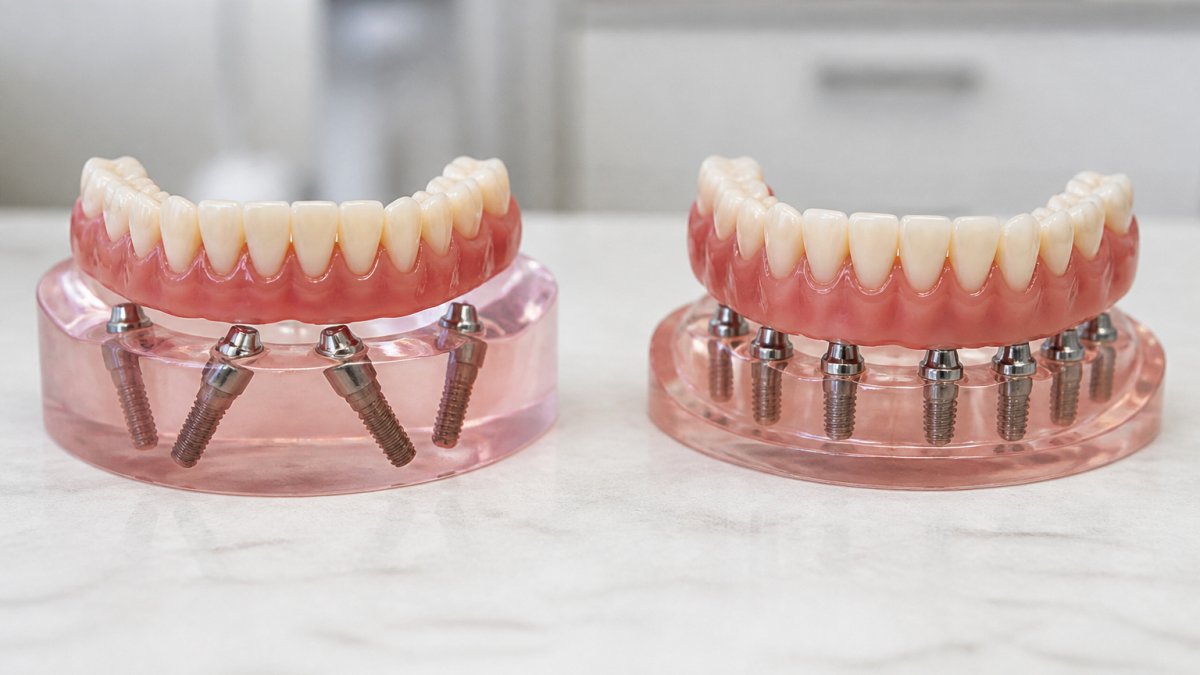
Traditional implant placement follows a two-stage protocol: the titanium post is placed, a healing cap is fitted, and you wait several months before the final crown is attached. This waiting period allows osseointegration, the biological process by which the titanium post fuses with surrounding jawbone tissue, to complete before any functional load is placed on the implant.
Immediate loading changes that sequence. The implant is placed and a prosthesis is attached during the same surgical appointment. The key requirement is that the implant achieves sufficient primary stability at placement. Without adequate initial stability, loading the implant too early risks disrupting osseointegration and causing implant failure. This is why not everyone qualifies, bone density, jawbone health, and implant location all determine whether immediate loading is clinically appropriate.
Temporary Prosthesis vs. Permanent Crown: The Key Distinction
What you receive on day one is almost always a temporary prosthesis, not your final permanent crown. The temporary restoration is designed to look natural and function reasonably well while osseointegration progresses over the following weeks and months. Once the implant has fully integrated with the jawbone, typically assessed via follow-up imaging, the temporary prosthesis is replaced with a permanent dental crown or full-arch restoration.
When you ask "can I get implants in 24 hours," the accurate answer is: you can have a tooth placed and a functional restoration attached in 24 hours. Your permanent crown comes later.
How the Same-Day Implant Surgical Procedure Works
Same-day implant surgery is a carefully sequenced clinical process, not a rushed shortcut. The entire procedure typically unfolds across a single extended appointment.
Step-by-Step: From Consultation to Walking Out With Teeth
Clinical consultation and imaging. A comprehensive examination includes digital X-rays and often a cone-beam CT scan to assess bone density, jawbone anatomy, and the position of nerves and sinuses.
Treatment planning. Implant placement sites are mapped digitally. For full-arch restorations, the number and angulation of implants are calculated to maximize stability.
Sedation and anesthesia. Local anesthesia is standard. For patients with dental anxiety or those undergoing complex procedures, I.V. sedation may be administered.
Tooth extraction (if needed). Failing or damaged teeth are removed at the same appointment. Implants can often be placed immediately into the extraction socket.
Implant placement. The titanium post is inserted into the prepared site in the jawbone. Implant stability is measured immediately after placement.
Abutment attachment. Once sufficient primary stability is confirmed, an abutment, the connector piece between the titanium post and the restoration, is attached.
Temporary prosthesis fitting. A pre-fabricated or same-day-milled temporary crown or full-arch prosthesis is secured to the abutment. The bite is carefully adjusted.
Post-operative review. Before you leave, you receive detailed care instructions and a follow-up schedule.

Total chair time for a single implant with immediate loading runs several hours. Full-arch restorations take longer. Plan for a full day.
Candidates for Same-Day Implants: Who Qualifies?
Not every patient is a candidate for same-day dental implant surgery. Patient eligibility is determined by anatomical, medical, and lifestyle factors.
Good candidates generally share these characteristics:
Adequate bone density at the implant site to support immediate loading
No active infection or uncontrolled periodontal disease
Controlled systemic health conditions
Non-smoker or willing to stop smoking during the healing period
Realistic expectations about the temporary nature of the day-one restoration
Pro Tip If you have been told in the past that you are "not a candidate" for implants, it is worth getting a second opinion with updated imaging. Advances in digital dentistry and surgical technique have expanded who qualifies.
Bone Density and Jawbone Health Requirements
Jawbone health is the single most important variable in same-day implant candidacy. The implant needs enough bone volume and density to achieve the primary stability required for immediate loading. According to the American Academy of Implant Dentistry's clinical guidelines, implant stability at placement is the primary predictor of successful osseointegration.
Bone loss is common in patients who have worn dentures for years or who have had missing teeth for an extended period. The jawbone resorbs over time without the stimulation of a tooth root.
When Bone Grafting Is Needed First
If bone volume is insufficient, bone grafting may be required before implant placement. The site must heal and consolidate, a process that takes several months, before implants can be placed. This is a common reason why some patients cannot proceed with same-day implants at their first appointment. Placing an implant into inadequate bone to meet a marketing promise is how implants fail.
Dental Implant Recovery Timeline After Same-Day Surgery
The dental implant recovery timeline after same-day surgery is longer than the name implies. "Same-day" refers to the placement procedure, not the recovery. Full osseointegration takes three to six months on average, and sometimes longer in older patients or areas with lower bone density.
Phase | Timeframe | What to Expect |
Immediate post-op | Days 1-3 | Swelling, mild bleeding, soreness; soft diet mandatory |
Early healing | Days 4-14 | Swelling subsides; gum tissue begins closing around implant |
Soft tissue healing | Weeks 2-6 | Most discomfort resolves; restricted diet continues |
Osseointegration | Months 2-5 | Bone fusing with titanium post; light normal foods permitted |
Final restoration | Month 4-6+ | Permanent crown or prosthesis placed after imaging confirms integration |
Post-Operative Diet and Daily Care
The temporary prosthesis is functional, but it is not bulletproof. Biting into hard or crunchy foods during osseointegration risks disrupting the implant before it has fully integrated.
Foods to avoid in the first six weeks: hard foods (raw carrots, crusty bread, nuts), chewy foods (bagels, tough meats), temperature extremes, alcohol, and tobacco.
Daily care protocol:
Rinse gently with warm salt water after meals for the first two weeks
Brush carefully around the implant site with a soft-bristle brush
Avoid water flossers at high pressure near the surgical site until cleared
Attend all follow-up appointments

Watch Out Skipping follow-up appointments is one of the most common reasons implants fail in the months after surgery. Osseointegration must be confirmed clinically before the permanent restoration is placed.
Is Same-Day Dental Implant Surgery Worth It in 2026?
For the right candidate, same-day dental implant surgery is genuinely worth it. The alternative, months without functional teeth while waiting for a staged procedure, carries its own costs: difficulty eating, continued bone resorption, and psychological weight of an incomplete smile.
Long-Term Success Rates: What the Evidence Shows
Long-term data on immediately loaded implants is encouraging. As documented in peer-reviewed research published in the Journal of Oral Implantology, immediately loaded implants placed in patients with adequate bone density show success rates comparable to traditionally loaded implants over five- to ten-year follow-up periods. The critical variables are patient selection and surgical technique, not the immediate loading protocol itself.
An immediately loaded implant placed in a well-selected patient by an experienced surgical team performs as well long-term as a staged implant.
Psychological Impact of Immediate Tooth Replacement
Patients who receive a functional restoration on the day of surgery report significantly better immediate quality of life compared to those who wait months with a gap or an ill-fitting denture. For seniors who have struggled with loose, painful dentures for years, walking out with stable, functional teeth changes how they eat, speak, and interact socially. According to research published by the National Institutes of Health on oral health and quality of life, tooth loss and poor-fitting prosthetics are associated with reduced social confidence and dietary restrictions. The emotional benefit of day one is often what patients remember most.
Risks, Complications, and What to Watch For
Same-day implant surgery carries the same fundamental risks as any oral surgery, with a few additional considerations specific to immediate loading.
Osseointegration failure. The most serious risk is that the implant fails to integrate with the jawbone. This is more likely in patients with insufficient bone density, uncontrolled systemic disease, or those who smoke. If integration fails, the implant must be removed and the site allowed to heal before attempting replacement.
Infection. Any surgical site carries infection risk. Following post-operative care instructions significantly reduces this risk.
Nerve proximity. Implants placed in the lower jaw must avoid the inferior alveolar nerve. Digital imaging and careful treatment planning minimize this risk.
Prosthesis fracture. Temporary prostheses are not designed for the same forces as permanent restorations. Biting hard foods or grinding teeth at night can fracture the temporary crown.
Implant overload. Placing too much functional stress on an immediately loaded implant before osseointegration is complete is a leading cause of early implant failure. This is managed through diet restrictions and careful bite adjustment.
Key Takeaway The risks of same-day implants are real but manageable with proper patient selection, experienced surgical technique, and patient compliance during recovery.
Insurance, Financing, and Understanding the Total Cost
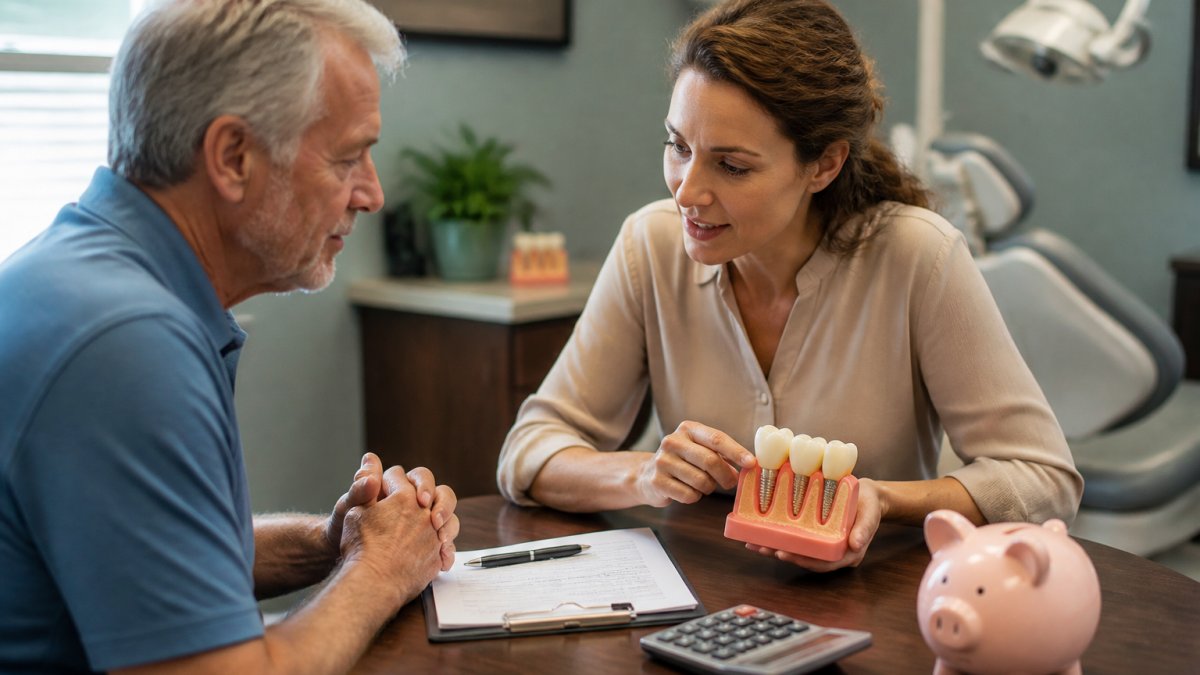
Dental implants remain one of the most significant out-of-pocket dental expenses most patients face. Understanding the financial picture before committing is essential.
Insurance coverage. Most traditional dental insurance plans provide limited or no coverage for implants, classifying them as elective rather than medically necessary. Medicare does not cover routine dental care, including implants, under standard Part A or Part B coverage. Some Medicare Advantage plans include dental benefits that may offset a portion of implant costs. As noted by the Centers for Medicare and Medicaid Services on Medicare dental coverage, beneficiaries should review their specific plan documents, as dental benefits vary significantly between Medicare Advantage plans.
What drives total cost. The total cost depends on the number of implants placed, whether bone grafting is required, the type of final restoration, sedation requirements, and geographic market pricing.
Financing options. Many dental practices offer third-party financing through patient financing programs that allow costs to be spread over time. Royal Dental at The Villages offers a 10% new patient discount on dental work and implants. For current pricing and financing options, contact the practice directly, as costs depend on your specific clinical needs and treatment plan.
Choosing same-day dental implants is a significant decision. The 24-hour claim is real, but it describes when the implant is placed, not when the process is complete. Royal Dental at The Villages brings over 30 years of experience to same-day implants and full-mouth restorations, with I.V. sedation available for patients who need it and personalized treatment plans built around your specific anatomy and goals. Get started with a consultation at Royal Dental at The Villages and find out whether same-day implants are the right solution for your situation.
Frequently Asked Questions
Can you really get dental implants in 24 hours?
Yes, same day implants are a real, clinically established procedure, but the 24-hour claim refers to receiving a functional temporary prosthesis on the day of surgery, not a finished permanent crown. The titanium post placed in your jawbone still requires several months of osseointegration before the permanent restoration is fitted. Candidates with adequate bone density and good overall health are the best fit for this approach.
What is the difference between 'Teeth-in-a-Day' and permanent implants?
Teeth-in-a-Day means you leave the office with a temporary prosthesis attached to implants on the same day as your oral surgery. That temporary restoration lets you eat, speak, and smile right away. Permanent implants, the final dental crowns or full-arch restoration, are placed later, typically three to six months after surgery, once the implants have fully bonded with the jawbone through osseointegration. Both are part of the same treatment plan.
Who is a candidate for 24-hour dental implant procedures?
Good candidates for same day implants generally have sufficient bone density to support immediate loading, healthy gum tissue, no uncontrolled systemic conditions such as unmanaged diabetes, and do not smoke heavily. Seniors can absolutely qualify, though a thorough clinical consultation, including digital imaging to assess jawbone health, is required first. Patients who lack adequate bone may need bone grafting before implant placement, which extends the overall timeline.
How many days of recovery are needed after same-day implant surgery?
Most patients feel well enough to resume light daily activities within two to three days. Swelling and mild discomfort typically peak around day two and ease within a week. Full osseointegration, the internal healing that makes implants permanent, takes three to six months. Post-operative care during that period, including a soft diet and careful oral hygiene, is critical to long-term implant stability and overall functional recovery.
Inquiry Services Page
This article was written using GrandRanker

Comments