
Cosmetic Dentistry Services: A Complete Guide
Table of Contents
What Are Cosmetic Dentistry Services?
Common Cosmetic Dentistry Treatments
Professional Teeth Whitening
Porcelain Veneers and Dental Bonding
Dental Crowns and Bridges
Dental Implants and Clear Aligners
Understanding Cosmetic Dentistry Cost
Typical fee ranges by procedure
What actually drives the price up or down
How dental insurance actually treats these procedures
Financing and payment options worth asking about
Questions to ask before you commit
Planning Your Smile Makeover
Step 1: Confirm you are a candidate
Step 2: Sequence treatments in the right order
Step 3: Understand the timeline
Step 4: Plan for maintenance from day one
Step 5: Set expectations about results
What to Expect During Your Cosmetic Dentistry Consultation
Why Choose Experienced Cosmetic Dentistry Care
Conclusion
Frequently Asked Questions
Last Updated: October 12, 2026
What Are Cosmetic Dentistry Services?
Cosmetic dentistry services focus on improving the appearance of your teeth, gums, and smile.
The range of cosmetic dentistry services available today is broader than most people realize: whether you have discolored teeth, gaps, misalignment, or missing teeth, there's typically a treatment option.
Many people hesitate because they assume cosmetic dentistry is vanity-driven or prohibitively expensive. In reality, a smile makeover can boost confidence and even address problems that affect chewing and speech.
Common Cosmetic Dentistry Treatments
Cosmetic dentistry encompasses many treatments, each addressing color and brightness, shape and alignment, or replacing missing teeth.
Professional Teeth Whitening
Professional teeth whitening is one of the most popular and accessible cosmetic dentistry services.
The process involves applying a whitening gel to the tooth surface, sometimes with a special light.
Whitening works best on natural tooth structure; crowns, veneers, and bonding won't whiten, which can create a mismatch. A consultation lets your dentist assess whether whitening alone will achieve your goals.
Porcelain Veneers and Dental Bonding
Porcelain veneers and dental bonding both reshape front teeth, addressing chips, cracks, gaps, discoloration, and minor misalignment.
Porcelain veneers are thin, custom-made shells bonded to the front of your teeth. They're durable, resist staining better than natural teeth, and can dramatically transform your smile.
Dental bonding uses tooth-colored composite resin to build up or reshape teeth. It's less invasive, quicker, and more affordable than veneers, but the material is softer and more prone to staining and chipping, typically lasting 5 to 10 years.
Dental Crowns and Bridges
Dental crowns are tooth-shaped caps that cover a damaged or weakened tooth entirely. They're both restorative and cosmetic, often necessary after root canal treatment, for severely decayed teeth, or to cover discolored teeth that can't be whitened.
Dental bridges replace one or more missing teeth by anchoring artificial teeth to adjacent natural teeth or implants.
Both crowns and bridges last 10 to 15 years or longer with the same brushing, flossing, and regular checkups as natural teeth.
Dental Implants and Clear Aligners
Dental implants are the gold standard for replacing missing teeth. An implant is a titanium post surgically placed in the jawbone, topped with a crown.
The implant process typically takes 3 to 6 months for the bone to integrate before the crown is placed.
Clear aligners like Invisalign are custom-made, removable trays that gradually shift teeth into alignment without metal braces.
Understanding Cosmetic Dentistry Cost
Cost is usually the first question patients ask. Fees vary by provider and case complexity, so treat these ranges as planning benchmarks rather than quotes.
Typical fee ranges by procedure
Professional in-office whitening: roughly $300 to $800 for a single visit; take-home trays from a dentist typically run $150 to $400.
Dental bonding (per tooth): roughly $200 to $600, depending on how many surfaces are rebuilt.
Porcelain veneers (per tooth): roughly $900 to $2,500. Full-mouth veneer cases commonly land between $12,000 and $30,000.
Dental crowns (per tooth): roughly $800 to $2,500 for all-porcelain or zirconia; metal-based crowns sit at the lower end.
Dental bridges (three-unit): roughly $2,000 to $5,000, driven by the number of pontics and the material.
Dental implants (single tooth, including abutment and crown): roughly $3,000 to $6,000. Full-arch implant solutions commonly run $20,000 to $60,000 per arch.
What actually drives the price up or down
Five factors explain most of the spread:
Material. Zirconia and layered porcelain cost more than base composite or metal alloys, but resist staining and fracture better.
Number of units. A single veneer is priced per tooth; a smile makeover of eight to ten veneers multiplies the fee.
Complexity and prep. A tooth that needs buildup, a root canal, or gum recontouring first adds cost.
Technology and lab work. Same-day CAD/CAM crowns and digitally designed veneers often carry a premium.
Provider and region.
How dental insurance actually treats these procedures
Most dental plans classify treatment as preventive, basic restorative, or major restorative, and cosmetic-only work usually falls outside all three:
Whitening, veneers placed purely for appearance, and cosmetic bonding are almost never covered.
Crowns, bridges, and implants may be partially covered when they restore function after decay, fracture, or tooth loss. Plans typically pay 50 percent of the allowed fee for major services after a deductible, up to an annual maximum that is often $1,000 to $2,000.
Orthodontics is sometimes covered for children and occasionally for adults, often with a lifetime cap rather than an annual one.
Medically necessary gum treatment may fall under a medical plan rather than a dental plan if it is tied to a diagnosed condition.
Watch Out A crown or implant that is covered for function may not be covered for the cosmetic upgrade you want. Ask your dentist for a pre-treatment estimate so you know the covered amount before work begins.
Financing and payment options worth asking about
Third-party dental financing (CareCredit, Cherry, and similar lenders) spreads treatment over 6 to 60 months, often with promotional no-interest periods for qualified applicants.
In-house payment plans at many practices split a case into monthly installments with no credit check.
Health savings and flexible spending accounts can be used for procedures that qualify as medical care, which often includes implants and crowns but usually excludes purely cosmetic whitening.
New-patient and multi-procedure discounts are common; ask whether combining treatments reduces the total.
Membership or in-house savings plans for uninsured patients typically discount fees 10 to 20 percent in exchange for an annual fee.
Questions to ask before you commit
Get a written treatment plan listing every procedure, the fee per unit, the estimated insurance payment, and your out-of-pocket balance. Ask what happens if a crown needs a remake, whether the fee includes the lab charge and follow-up visits, and whether the practice offers a warranty.
Key Takeaway Cosmetic procedures are rarely covered by dental insurance, but functional versions of the same treatment sometimes are. Always request a pre-treatment estimate and ask about financing before scheduling. Royal Dental at The Villages offers a new patients discount of 10% on dental work and implants.
Planning Your Smile Makeover
A smile makeover is a sequenced treatment plan, not a single appointment. Whether a result looks natural for a decade or needs rework in two years comes down to planning: candidacy, sequencing, and a realistic timeline.

Step 1: Confirm you are a candidate
Cosmetic work should sit on a healthy foundation. Before any aesthetic treatment, your dentist will check:
No active decay or infection. Cavities and abscesses must be treated first, or new restorations will fail.
Stable gum health. Active periodontal disease causes recession and bone loss that will undermine veneers, crowns, and implants.
A stable bite. Untreated grinding (bruxism) or a misaligned bite can crack veneers and wear down bonding. A night guard is often recommended before or alongside cosmetic work.
Adequate bone for implants. If bone has been lost, a graft may be needed, which adds months to the timeline.
Realistic expectations. No procedure produces a perfect result, and results age with you.
Pro Tip Bring photos of smiles you like and dislike. Visual references help your dentist understand the shape, shade, and proportion you are aiming for far better than words alone.
Step 2: Sequence treatments in the right order
Order matters because later treatments are matched to earlier ones. A common sequence:
Address disease first. Fillings, root canals, and gum therapy come before any cosmetic work.
Straighten or align. Clear aligners or braces move teeth into position before veneers or bonding are shaped to them.
Place implants and let them integrate. Implant healing takes roughly 3 to 6 months before the final crown is placed.
Whiten natural teeth. Whitening comes before bonding or veneers so the new material can be shade-matched to the final tooth color.
Place veneers, bonding, and crowns. These are matched to the whitened shade and the final tooth position.
Refine the gums. Gum contouring or laser recontouring is often done last to frame the finished teeth.
If you are getting implants and veneers together, the implant crown is usually placed before the adjacent veneers so the shade can be matched. If you are whitening and bonding, whitening comes first for the same reason.
Step 3: Understand the timeline
A realistic schedule for a multi-treatment makeover:
Consultation and records: one visit, 60 to 90 minutes, including X-rays and photos.
Treatment planning and lab work: one to three weeks.
Whitening: one in-office visit, or two to three weeks of take-home trays.
Bonding: one visit per few teeth, often a single appointment for a full case.
Veneers: two to three visits over two to four weeks, including prep, temporaries, and final bonding.
Crowns: two visits, roughly two weeks apart, or a single visit with same-day CAD/CAM.
Clear aligners: 6 to 18 months for most cases.
A full smile makeover combining several of these can take anywhere from a few weeks to over a year, depending on how many stages are involved.
Step 4: Plan for maintenance from day one
Longevity depends as much on upkeep as on the procedure:
Whitening: touch-ups every 6 to 12 months; limit coffee, red wine, and tobacco.
Bonding: expect 5 to 10 years; composite stains and chips more easily than porcelain.
Veneers: typically 10 to 15 years; avoid biting nails, ice, or hard candy.
Crowns and bridges: 10 to 15 years or longer with good hygiene and regular checkups.
Implants: the titanium post can last decades, but the crown on top usually needs replacement after 10 to 15 years.
Aligners: a retainer is required after treatment to prevent relapse.
Key Takeaway A successful makeover is sequenced, not stacked. Treat disease first, align second, whiten before bonding or veneers, and place implants before the restorations that will be matched to them.
Step 5: Set expectations about results
Ask your dentist to show before-and-after examples of similar cases and what results are realistic for your starting point. A good plan includes a mock-up or digital preview when possible, a written timeline, and a clear statement of what treatment will and will not change.
What to Expect During Your Cosmetic Dentistry Consultation
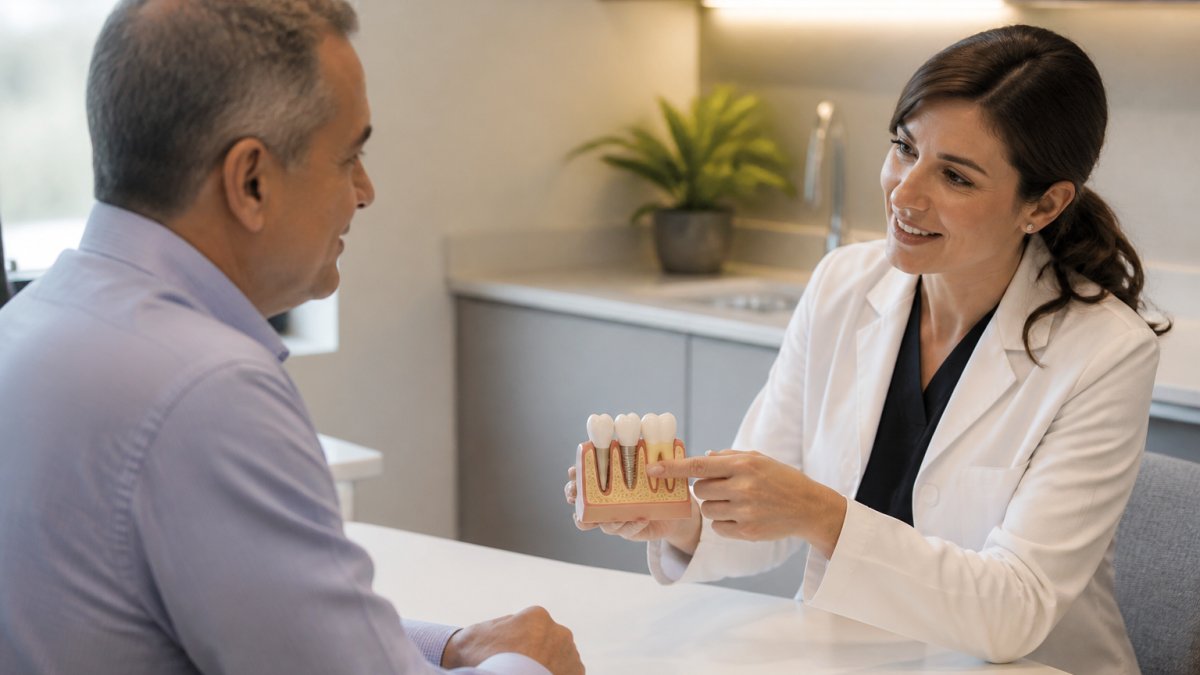
A consultation is where your cosmetic dentistry journey begins, letting you and your dentist discuss goals, assess your current condition, and explore treatment options.
Bring photos of smiles you admire to give your dentist a visual reference for the aesthetic direction you want.
Ask about the procedure, recovery time, longevity, maintenance, and costs, plus their experience with the treatments you're considering and what happens if you're not satisfied.
Why Choose Experienced Cosmetic Dentistry Care
Cosmetic dentistry is both an art and a science.
An experienced cosmetic dentist understands proportion, color theory, and how teeth fit within your face, creating natural, age-appropriate results.
At Royal Dental at The Villages, our team brings over 30 years of experience in advanced cosmetic dentistry and full-mouth restorations.
Choosing an experienced provider also means choosing someone who stands behind their work.
Conclusion
Cosmetic dentistry services offer real solutions for transforming your smile and boosting your confidence. Whether you're interested in professional whitening, veneers, implants, or a comprehensive smile makeover, the options today are more advanced and accessible than ever.
At Royal Dental at The Villages, we specialize in the full spectrum of cosmetic dentistry services, including same-day implants and full-mouth restorations in 24 hours. If you're ready to explore your options, contact Royal Dental at The Villages to inquire about services today.
Frequently Asked Questions
What cosmetic dentistry services are most popular?
The most sought-after cosmetic dentistry services include professional teeth whitening, porcelain veneers, dental bonding, dental implants, and clear aligners. Many patients combine multiple treatments as part of a comprehensive smile makeover. Your cosmetic dentist can recommend which services best address your specific concerns, whether you're looking to brighten stained teeth, close gaps, replace missing teeth, or reshape your smile entirely.
How much do cosmetic dentistry treatments typically cost?
Cosmetic dentistry cost varies significantly based on the specific treatment and complexity of your case. Contact Royal Dental at The Villages for a personalized quote based on your treatment plan.
Are cosmetic dental treatments permanent?
Permanence depends on the treatment type. Dental implants and crowns can last 15-20+ years with proper care. Porcelain veneers typically last 10-15 years. Dental bonding lasts 5-10 years. Professional whitening results fade over time, usually lasting 6 months to 2 years depending on your habits. Proper maintenance, regular checkups, and good oral hygiene extend the life of all cosmetic treatments significantly.
What should I ask during a cosmetic dentistry consultation?
During your cosmetic dentistry consultation, ask about treatment options for your specific concerns, expected results and timelines, the dentist's experience with your desired procedure, before-and-after photos from similar cases, maintenance requirements, potential risks or limitations, and detailed cost estimates. Also discuss whether you're a candidate for same-day treatments or if multiple appointments are needed. Ask about sedation options if you experience dental anxiety, and clarify what's included in quoted prices.
Inquiry Services Page


Comments