
Cost of Full Mouth Restorations: 2026 Guide
Table of Contents
What Is Full Mouth Restoration?
Full Mouth Dental Implants Cost Breakdown
Factors That Influence Full Mouth Restoration Pricing Material Selection and Longevity Bone Grafting and Preparatory Procedures Geographic Location and Provider Experience
Material Selection and Longevity
Bone Grafting and Preparatory Procedures
Geographic Location and Provider Experience
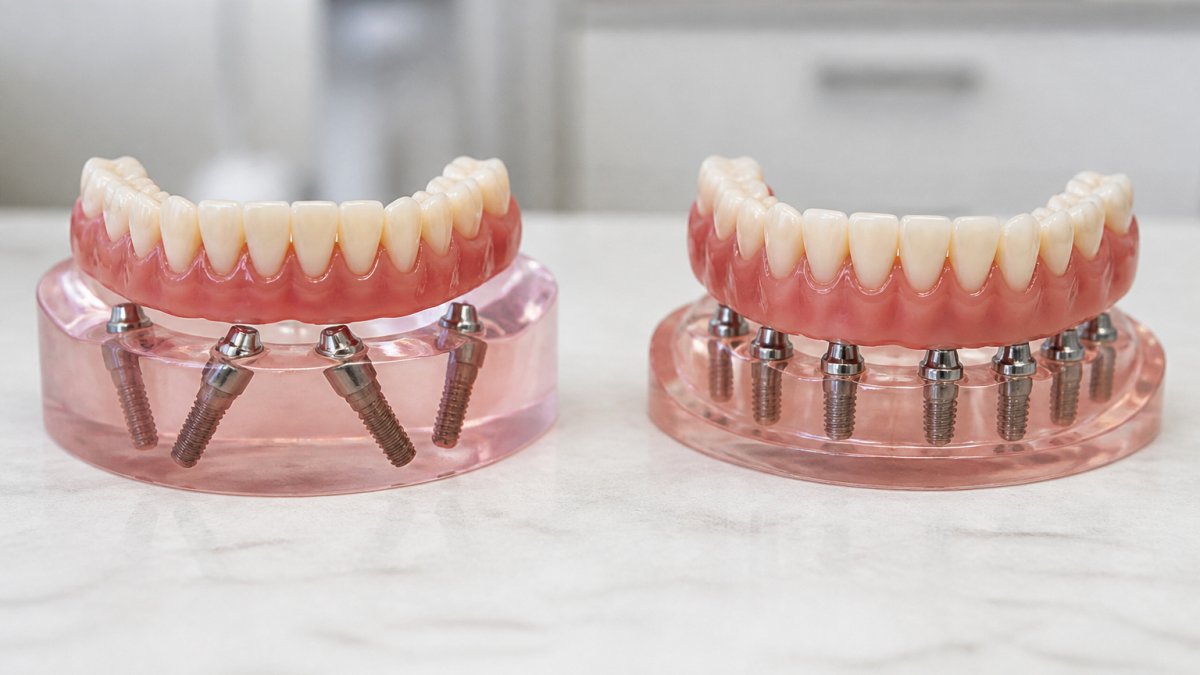
All-on-4 vs. All-on-6 vs. All-on-8 Implants
Dental Reconstruction Financing Options Third-Party Medical Credit Cards Installment Loan Programs
Third-Party Medical Credit Cards
Installment Loan Programs
Insurance Coverage and Dental Benefits
Full Mouth Restoration Recovery Time and Long-Term Maintenance
Is Full Mouth Restoration Right for You?
Last Updated: August 28, 2026
What Is Full Mouth Restoration?
Full mouth restoration is a comprehensive dental treatment that replaces missing, damaged, or failing teeth across the entire mouth using dental implants, crowns, bridges, and other restorative materials. Rather than extracting individual teeth one at a time, this approach rebuilds your entire bite in a coordinated treatment plan. The cost of full mouth restorations varies dramatically based on materials, bone grafting needs, geographic location, and provider experience.
At Royal Dental at The Villages, we've helped countless patients understand that full mouth restoration isn't just about replacing teeth, it's about restoring function, confidence, and quality of life. The procedure typically involves placing multiple dental implants (usually 4 to 8 per arch) that serve as artificial tooth roots, topped with custom-made crowns or bridges. This fixed full arch approach differs fundamentally from traditional dentures because the implants are anchored directly into your jawbone, creating a stable, permanent solution.
Key Takeaway Full mouth restoration replaces all teeth in one or both arches using implants and custom restorations, delivering better function and aesthetics than dentures, but requiring significant upfront investment and careful planning.
Full Mouth Dental Implants Cost Breakdown
The full mouth dental implants cost depends on several interconnected factors. A full mouth restoration typically involves implant placement surgery, bone grafting (if needed), temporary restorations during healing, and final permanent crowns or bridges.

The surgical phase, placing 4 to 8 implants per arch, represents the largest single expense. Each titanium post requires precise placement into the jawbone, often under sedation. Many practices bundle implant placement, abutments, and initial restorations into a single quoted price, while others itemize each component separately. Getting a detailed treatment plan in writing helps clarify what's included.
Temporary restorations during the 3-6 month osseointegration period (when bone fuses to the implant) add another cost layer. These allow you to eat and speak normally while your implants stabilize. Once osseointegration is complete, the permanent restoration is fabricated to match your natural tooth color, shape, and bite.
Materials dramatically shift the final bill. Porcelain crowns cost more than composite resins but last longer and resist staining better. Zirconia bridges offer superior strength and aesthetics compared to older porcelain-fused-to-metal designs. Your dentist should explain the longevity and maintenance differences between materials.
Watch Out Beware of "all-inclusive" pricing that seems unusually low. If the quoted price doesn't itemize implants, abutments, temporary restorations, and final crowns separately, ask what's actually included. Hidden costs emerge when bone grafting or temporary restorations weren't budgeted.
Factors That Influence Full Mouth Restoration Pricing
Material Selection and Longevity
The materials you choose directly impact both cost and lifespan. Porcelain crowns and bridges look natural, resist staining, and typically last 10-15 years with proper care (the American Dental Association). Zirconia restorations cost more upfront but offer superior strength and can last 15-20 years, making them ideal for long-term planning.
Composite resin crowns are the least expensive option but require more frequent replacement and don't withstand heavy chewing forces as well. Custom abutments, milled specifically for your implant and jaw structure, ensure better fit and esthetics than stock abutments, often saving money long-term by reducing complications.
Bone Grafting and Preparatory Procedures
If you've worn dentures for years or lost teeth to disease, your jawbone has likely resorbed significantly. Bone grafting rebuilds the foundation that implants need to anchor securely. A sinus lift, used when upper back teeth are missing and the sinus has descended, adds another procedural layer.
Bone grafting materials range from your own bone (autograft) to donor bone (allograft) to synthetic bone substitutes. Autografts are biologically superior but require an additional surgical site and healing time. Allografts and synthetics are less invasive but may cost more. Diagnostic imaging, including panoramic X-rays and 3D CT scans, is essential for surgical planning and shows exactly how much bone you have and where nerves and sinuses are located.
Geographic Location and Provider Experience
A full mouth restoration in a major metropolitan area costs significantly more than the same treatment in a smaller city. Provider experience also matters enormously. A prosthodontist or oral surgeon with 20+ years of implant experience will charge more than a general dentist placing their first implant cases, but typically delivers lower complication rates and better esthetic outcomes.
Royal Dental at The Villages brings over 30 years of experience to every full mouth case, which reflects in both the precision of planning and the predictability of results. Geographic variation also affects material costs and insurance reimbursement patterns.
All-on-4 vs. All-on-6 vs. All-on-8 Implants
The number of implants you need depends on bone volume, bite force, and your dentist's surgical philosophy.
All-on-4 uses four implants per arch, positioned at angles to maximize bone contact and distribute bite forces efficiently. This is the most affordable option but concentrates more force on each implant, which can accelerate wear over time.
All-on-6 adds two additional implants for a total of six per arch. This configuration distributes bite forces more evenly and provides better long-term stability. Most patients with moderate bone volume are good candidates, and many prosthodontists consider it the optimal balance of predictability, longevity, and value.
All-on-8 places eight implants per arch, typically reserved for patients with heavy bite forces, those who have failed previous implant treatments, or those who want maximum security and longevity. It's the most expensive option but offers the best force distribution and longest potential lifespan.
Pro Tip If your bone volume is borderline, ask whether bone grafting to support All-on-6 makes sense long-term. The additional upfront cost may be worth it if it prevents complications or replacement surgery in 10-15 years.
Dental Reconstruction Financing Options
Third-Party Medical Credit Cards
Medical credit cards like CareCredit, Sunbit, and LendingClub Patient Solutions are designed specifically for healthcare expenses and offer promotional financing that traditional credit cards don't.
CareCredit, the most widely accepted option, offers no-interest periods ranging from 6 to 24 months on purchases over $200. Approval is fast, often instant, using a soft credit check that doesn't impact your credit score. Deferred interest applies if you don't pay the balance in full by the end of the promotional period.
Sunbit emphasizes accessibility, with approval rates often exceeding 85% even for patients with lower credit scores. Payment plans range from 6 to 72 months with no application fees, late fees, or prepayment penalties. Their financing cap is typically $20,000.
LendingClub Patient Solutions offers financing up to $65,000, making it suitable for comprehensive cases. Rates range from 3.99% to 24.99% APR depending on credit approval, with both promotional no-interest periods and extended fixed-rate plans.
Installment Loan Programs
Traditional personal loans from banks and credit unions offer predictability, you know your monthly payment and interest rate upfront with no risk of deferred interest surprises. Ally Lending and similar lenders have partnered with dental practices to offer simplified digital applications and faster approval.
Many dental practices also offer in-house financing or payment plans, sometimes interest-free for qualified patients. Ask whether your provider offers this option.
Insurance Coverage and Dental Benefits
Dental insurance rarely covers full mouth restorations comprehensively. Most PPO plans cover preventive care at 100%, basic restorative work at 70-80%, and major restorative services at around 50% (the American Dental Association). Most plans have annual maximums of $1,000 to $2,000, waiting periods of 6-12 months for major services, and "missing tooth clauses" that exclude coverage for teeth lost before your coverage began.
Dental implants occupy a gray area in many plans. Some cover the crown portion but not the surgical implant placement, classifying the surgery as cosmetic. Others cover implants only if they replace teeth lost due to accident or disease, not decay or periodontal disease. Reading your plan documents carefully or calling your insurer directly is essential.
A dental benefits professional or your provider's billing team can often help file appeals if coverage is initially denied. Documenting medical necessity strengthens appeal cases.
Full Mouth Restoration Recovery Time and Long-Term Maintenance
Recovery from full mouth restoration involves multiple phases. The initial surgical phase typically involves 1-2 weeks of swelling, bruising, and discomfort managed with pain medication and ice. Most patients return to light activity after a few days and resume normal work within a week, though strenuous exercise should wait 2-3 weeks. Temporary restorations are placed immediately, so you leave with functional teeth.

Osseointegration, the process of bone fusing to the implant, takes 3-6 months (peer-reviewed research). During this time, you're wearing temporary restorations and avoiding hard or sticky foods. Once osseointegration is confirmed, final restoration fabrication begins, taking 2-4 weeks as your lab creates custom crowns or bridges.
Long-term maintenance is straightforward but essential. Daily brushing and flossing around implants prevents bacterial biofilm accumulation, which can lead to peri-implantitis. Professional cleanings every 6 months, combined with home care, keep implants healthy for decades. Many patients report that the investment pays for itself in quality of life within the first year.
Key Takeaway Expect 3-6 months from implant placement to final restoration, with temporary teeth functional throughout. Long-term success depends on consistent home care and professional maintenance, but implants typically last 15-20+ years with proper care.
Is Full Mouth Restoration Right for You?
Full mouth restoration is appropriate for patients with multiple missing or failing teeth who want a permanent, fixed solution. Good candidates typically have adequate bone volume or willingness to undergo bone grafting, overall good health, realistic expectations about cost and timeline, commitment to excellent oral hygiene, and sufficient finances or access to financing options.
Patients with severe dental anxiety often find that full mouth restoration is worth the investment because it eliminates the need for frequent dental visits once healing is complete. Age alone isn't a barrier, seniors in their 70s and 80s routinely undergo successful full mouth restorations.
If you've been wearing dentures that never fit right, eating has become painful, or you've avoided smiling in photos for years, full mouth restoration addresses the root problem rather than managing symptoms. The cost of full mouth restorations is substantial, but so is the return in function and confidence.
Royal Dental at The Villages offers a comprehensive consultation that includes 3D imaging, bone assessment, and a detailed treatment plan with itemized costs. Our 30 years of experience means we've handled complex cases, severe bone loss, multiple failed implants from other providers, and patients with significant anxiety. A consultation allows you to understand your specific situation, your options, and realistic pricing before committing to treatment.
Full mouth restoration represents one of the most transformative dental investments you can make. Understanding the components of cost, the financing options available, and the long-term maintenance requirements allows you to make a decision aligned with your health, finances, and goals. Get started with Royal Dental at The Villages and schedule a consultation to discuss your restoration options, explore financing that fits your budget, and understand exactly what your personalized treatment plan will involve.
Financing Option | Approval Speed | Best For | Key Feature |
CareCredit | Instant (soft check) | Wide acceptance | No-interest promotions 6-24 months |
Sunbit | Seconds (soft check) | Lower credit scores | High approval rates, no hidden fees |
LendingClub Patient Solutions | 1-3 days | Large cases | Financing up to $65,000 |
Ally Lending | Digital, fast | Partnered practices | Simplified application |
In-house dental financing | Varies | Established patients | Often interest-free options |
Delta Dental PPO | N/A (insurance) | Ongoing coverage | 50% major services, annual max |
MetLife Dental PPO | N/A (insurance) | Employer plans | Negotiated provider fees |
Frequently Asked Questions
How much does a full mouth restoration typically cost?
The cost of full mouth restorations varies based on the number of implants, materials used, and preparatory procedures needed. Factors like bone grafting, sinus lifts, and the type of restoration (fixed vs. removable) significantly affect the final price. Contact Royal Dental at The Villages for a personalized quote based on your specific needs and treatment plan.
What financing options are available for full mouth dental implants cost?
Multiple financing solutions exist for full mouth dental implants. CareCredit offers promotional no-interest periods for 6-24 months on purchases over $200. Sunbit provides quick approval with no hard credit check and payment plans up to 72 months. LendingClub Patient Solutions offers financing up to $65,000 with both no-interest promotional plans and extended fixed-rate options.
Does dental insurance cover full mouth restoration?
Most dental insurance plans cover a portion of full mouth restoration costs. However, waiting periods (often 12 months) typically apply to major services, and coverage for implants may be limited or excluded depending on your specific plan. Review your policy details or contact your insurer for exact coverage.
How long is the full mouth restoration recovery time?
Recovery varies by procedure type and individual healing. Initial healing from implant placement typically takes 3-6 months as the titanium posts integrate with bone (osseointegration). During this time, temporary prosthesis solutions allow you to eat and function. Permanent restorations are placed after osseointegration completes. Some practices offer same-day or 24-hour restoration options with temporary solutions, allowing faster return to normal function. Your prosthodontist will provide a specific timeline based on your treatment plan.
What makes full mouth restoration worth the investment?
Full mouth restoration eliminates the pain and discomfort of ill-fitting dentures, restoring your ability to eat, speak, and smile with confidence. Fixed implant restorations provide superior stability compared to removable dentures, improving chewing function and nutritional intake. The psychological benefits include restored self-esteem and quality of life. With proper maintenance, implant-supported restorations can last 15-20+ years, making them a long-term investment in oral health and overall well-being.
Inquiry Services Page
This article was written using GrandRanker


Comments