
Full Mouth Reconstruction Before and After Review: 2026 Guide
Table of Contents
What a Full Mouth Reconstruction Before and After Review Actually Tells You
How to Read Before-and-After Photos Honestly
Full Mouth Reconstruction Before and After Photos: What Changes and What Doesn't
What Typically Changes
What Photos Rarely Show
A Case-Detail Framework for Reading Any Gallery
How to Assess the Authenticity of Before-and-After Photos and Reviews
What to Ask Before You Trust a Gallery
Full Mouth Reconstruction Reviews: What Patients Say About Function, Fit, and Confidence
Full Mouth Reconstruction Recovery Time: Week-by-Week Healing and Adjustment
Full Mouth Reconstruction Pros and Cons: An Honest Look at Trade-Offs
Pros
Cons
Risks and Limitations by Procedure
Treatment-Plan Trade-Offs: When Less Is More
Cost Drivers and Long-Term Maintenance
Risks, Limitations, and What Before-and-After Photos Don't Show
Cost, Long-Term Maintenance, and Choosing Your Provider
Frequently Asked Questions
Last Updated: October 12, 2026
What a Full Mouth Reconstruction Before and After Review Actually Tells You
A full mouth reconstruction before and after review compares a patient's teeth, bite, and smile function before and after treatment. At Royal Dental at The Villages, we have spent over 30 years helping patients understand what these images show, and what they leave out. Reconstruction rebuilds damaged, missing, or worn teeth, but a photo alone never tells the whole story.
How to Read Before-and-After Photos Honestly
Most people scroll straight to the pictures. That is fine if you know what to check.
Lighting and angle: A true comparison uses the same camera position, lighting, and background for both shots.
The full smile, not just the front teeth: Reconstruction changes bite alignment and chewing function, not only the visible front teeth.
Gum health: Healthy pink tissue around crowns and implants signals a stable result.
The American Dental Association's resources on dental procedures offers plain-language guidance on what restorative treatments involve, which helps you ask better questions.
Watch Out Beware of before-and-after galleries with no case details, no dates, and inconsistent lighting. Those images may be stock photos or heavily edited, and they tell you nothing about the dentist's actual work.
Full Mouth Reconstruction Before and After Photos: What Changes and What Doesn't
Photos capture appearance, not how it feels to bite into an apple again. The most useful reviews pair each image with case details, so you can compare your situation to a real starting point rather than a polished final shot.
What Typically Changes
Tooth color, shape, and alignment
Gaps and spaces from missing teeth
The vertical dimension of the bite when teeth have worn down
What Photos Rarely Show
Improved chewing function and the ability to eat tougher foods
Reduced jaw soreness and fewer headaches tied to bite problems
Clearer speech after teeth and bite are rebuilt
These functional gains often matter more than the visual ones, so a photo-only review is incomplete.
A Case-Detail Framework for Reading Any Gallery
When you look at a reconstruction gallery, ask whether each case discloses these five items.
Starting condition, How many teeth were missing, broken, or worn? Was there bone loss, gum disease, or a collapsed bite?
Procedures performed, Implants, crowns, bridges, veneers, extractions, bone grafting, or a removable prosthesis?
Timeline, Was it a single-day implant case or a staged plan over several months?
Outcome reported, Function restored, comfort improved, appearance changed, or all three?
Follow-up window, Was the after photo taken at one month, one year, or five years?
A gallery showing only the final smile, with no starting condition or timeline, is a marketing image. One that shows all five is a case review you can learn from.
How to Assess the Authenticity of Before-and-After Photos and Reviews
Use this checklist before trusting any gallery or testimonial:
Same camera, angle, and lighting in both shots. Different lighting can make the same result look dramatically better or worse.
Full smile, not just the front teeth. Reconstruction changes bite alignment and chewing surfaces, not only the visible front teeth.
Gum health visible. Healthy pink tissue around crowns and implants signals a stable result; red, swollen, or receding tissue may signal a problem.
The American Dental Association's resources on dental procedures offers plain-language guidance on what restorative treatments involve, which helps you ask better questions. The FTC guidance on endorsements and testimonials explains how reviews and testimonials should be disclosed, which helps you judge whether what you're reading is genuine.
What to Ask Before You Trust a Gallery
Can I see a case with a starting condition similar to mine?
How long after treatment was the after photo taken?
Were any of these cases revised or re-treated, and why?
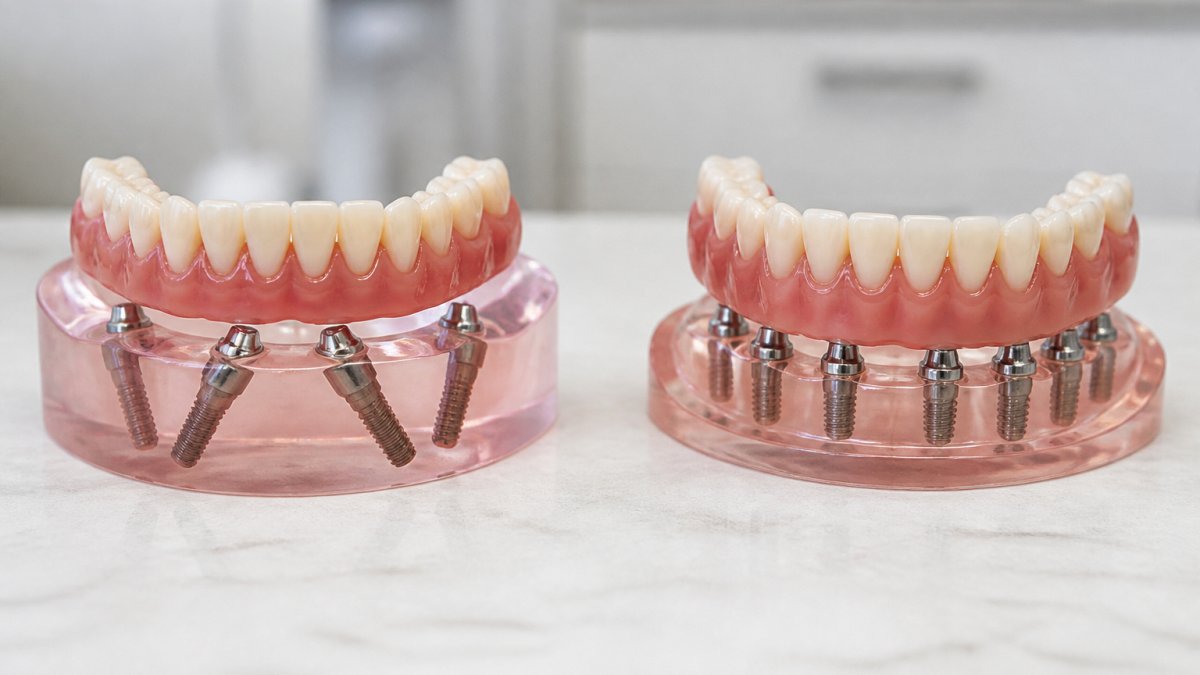
A realistic treatment plan may include dental implants, crowns, bridges, or dentures, sometimes staged over several visits. Some cases qualify for same-day implant placement; complex reconstructions follow a staged timeline. Our team at Royal Dental at The Villages builds each plan around a comprehensive examination, diagnostic imaging, and a wax-up model so you can preview the result before treatment starts.
Full Mouth Reconstruction Reviews: What Patients Say About Function, Fit, and Confidence
Patient reviews cluster around three themes: eating comfortably, fit and feel, and confidence. Read reviews with those three lenses.

When you read a full mouth reconstruction review, look for specifics.
The FTC guidance on endorsements and testimonials explains how reviews and testimonials should be disclosed, which helps you judge whether what you're reading is genuine.
Pro Tip Call the practice and ask if you can speak with a past reconstruction patient directly. Offices that stand behind their work usually say yes.
Full Mouth Reconstruction Recovery Time: Week-by-Week Healing and Adjustment
Recovery depends on which procedures you had and how many teeth were treated. A single implant site heals differently from a full arch restoration.
Days 1-3: Swelling and soreness peak. Soft foods, rest, and prescribed medication help.
Week 1: Most patients return to normal routines. Temporary teeth stay in place while tissues settle.
Weeks 2-4: Bite adjustments happen as swelling fades. Speech and chewing feel more natural.
Patients often ask how long they will be "out of commission." For many, it is a few days of taking it easy, then a gradual return to normal eating. Your timeline will be confirmed during your consultation.
Full Mouth Reconstruction Pros and Cons: An Honest Look at Trade-Offs
No treatment is right for everyone, and trade-offs depend on which procedures your plan includes. A single implant and a full-arch reconstruction carry different risks, timelines, and maintenance demands. Here is the honest version.
Pros
Restored chewing function and less jaw pain when the bite is rebuilt correctly
A natural-looking smile that matches your face rather than a one-size-fits-all template
Durable materials, many crowns, bridges, and implant-supported restorations last a decade or longer with care
Cons
Multiple appointments and a healing period, especially when implants or bone grafting are involved
Higher investment than single-tooth treatment, with the total driven by the number of teeth treated and the materials chosen
Requires consistent oral hygiene and follow-up visits; neglect shortens the life of the work
Risks and Limitations by Procedure
Complications are uncommon when cases are planned well, but each procedure carries its own profile. Ask your provider to walk through these for your plan.
Procedure | Common Risks | Realistic Limits |
Dental implants | Failure to integrate with bone, infection, nerve or sinus proximity issues, peri-implantitis over time | Success depends on bone quality, hygiene, and smoking status; grafting may be required first |
Crowns | Chipping, wear on opposing teeth, margin leakage, need for replacement | Lifespan varies with material, bite forces, and grinding habits |
Bridges | Decay or failure of the supporting teeth, difficulty cleaning under the span | Not ideal when supporting teeth are already compromised |
Removable restorations (partials, dentures) | Sore spots, looseness over time, bone shrinkage under the appliance | Fit changes as the jaw changes; relines and replacements are expected |
Bone grafting | Graft resorption, infection, longer healing | Adds weeks to months before implant placement |
Treatment-Plan Trade-Offs: When Less Is More
Reconstruction is not always the right answer. Sometimes a smaller plan delivers most of the benefit at a fraction of the cost and risk.
A few crowns or a bridge may restore function when damage is limited to a few teeth, avoiding implant surgery entirely.
Implant-supported restorations make sense when multiple teeth are missing and the bone can support them.
Removable restorations can be appropriate when surgery is not advisable due to health, bone loss, or cost.
A candid provider will tell you when a less extensive plan is reasonable, and why.
Cost Drivers and Long-Term Maintenance
Cost varies widely because every reconstruction is different. The main drivers are:
Number of implants placed
Whether bone grafting or extractions are needed
Type of final restorations (material and complexity)
Whether sedation is used
We do not publish flat pricing because a quote for one patient would mislead another. Instead, we provide an itemized estimate after your examination, and new patients receive a 10% discount on dental work and implants.
Maintenance matters as much as the initial work. Plan on regular cleanings, nightly hygiene, and periodic imaging to catch problems early. Implant-supported restorations need professional maintenance at intervals your provider sets, and removable appliances need periodic relines as the jaw changes.
Consideration | What It Means for You |
Time commitment | Staged visits over weeks to months, longer if grafting is needed |
Comfort during healing | Temporary teeth keep you functional while tissues settle |
Long-term care | Regular cleanings, checkups, and imaging protect the result |
Best candidates | Patients with multiple damaged, missing, or worn teeth and stable overall health |
Key Takeaway The strongest predictor of a good outcome is not the photo. It is the treatment plan, the provider's experience, and how faithfully you follow the maintenance schedule. Ask about risks, limits, and alternatives before you commit.
Risks, Limitations, and What Before-and-After Photos Don't Show
Every procedure carries some risk. Implants can fail to integrate, crowns can chip, and gum disease can return if hygiene slips. These outcomes are uncommon when cases are planned well, but a good provider explains them upfront.
Photos also hide the adjustment period: the weeks of learning to bite and speak with new teeth. The National Institute of Dental and Craniofacial Research publishes background on oral health conditions that affect reconstruction planning.
Cost, Long-Term Maintenance, and Choosing Your Provider
Cost varies widely because every reconstruction is different. The number of implants, whether bone grafting is needed, and the type of final restorations all change the total.
When choosing a provider, ask:
How many full mouth reconstructions do you complete each year?
Can you handle implants, cosmetic work, and restoration in one office?
What happens if a restoration needs adjustment?
Do you offer sedation for anxious patients?
At Royal Dental at The Villages, we handle the full scope in one place, from same-day implants to final cosmetic work, with I.V. sedation available for patients who need it.
A full mouth reconstruction is a significant commitment, and the right provider makes the difference between a result you tolerate and one you enjoy every day.
Frequently Asked Questions
How long does full mouth reconstruction take?
Timelines vary by case. Some full mouth reconstruction plans are completed in one long appointment, while complex cases with extractions, bone grafting, or implant healing can stretch across several months. Your dentist will map out treatment stages after a comprehensive examination, diagnostic imaging, and a wax-up model. Ask for the full timeline in writing, including temporary teeth, follow-up visits, and any healing periods between procedures.
What can before-and-after photos tell you about full mouth reconstruction results?
Before-and-after photos show changes in tooth color, shape, alignment, and smile aesthetics, which helps you judge what is realistic. They cannot show chewing function, speech clarity, or oral comfort. Look for photos taken under the same lighting and angle, ask whether the cases involved dental implants, crowns, bridges, or dentures, and request case-specific details rather than a generic gallery. Photos are a starting point, not a guarantee.
How long does it take to recover from full mouth reconstruction?
Most patients manage soreness, swelling, and an adjustment period within the first one to two weeks, with a soft-food diet during early healing. Full recovery depends on which procedures were done, such as dental implants versus crowns or bridges. Follow your dentist's instructions on oral hygiene, medications, and follow-up visits. If you have severe dental anxiety, ask about I.V. sedation, which is commonly used for complex procedures.
What are the downsides of full mouth reconstruction?
The main downsides are cost, treatment duration, and recovery time. Some procedures carry risks such as implant failure, infection, or bite alignment changes that need adjustment. Maintenance is ongoing: daily oral hygiene, regular checkups, and possible repairs to crowns, bridges, or dentures over time. A thorough consultation should cover these limitations honestly so you can weigh benefits against commitment before starting.
Can full mouth reconstruction fix years of damage from missing teeth, decay, or gum disease?
In many cases, yes. A treatment plan can address damaged teeth, missing teeth, worn teeth, tooth decay, and gum disease using dental implants, crowns, bridges, or dentures. The goal is to restore chewing function, bite alignment, speech clarity, and smile aesthetics. Candidacy depends on your overall health and bone structure, so a comprehensive examination with diagnostic imaging is essential before committing to any plan.
Inquiry Services Page


Comments