
How to Find Affordable Dental Implants: 2026 Guide
Table of Contents
Understanding What Drives the Cost of Dental Implants Without Insurance The Core Components: Implant Post, Abutment, and Crown Additional Procedures That Add to Your Out-of-Pocket Expenses
The Core Components: Implant Post, Abutment, and Crown
Additional Procedures That Add to Your Out-of-Pocket Expenses
How to Find Affordable Dental Implants: A Step-by-Step Approach Step 1: Get Multiple Treatment Plans and Compare Pricing Transparently Step 2: Check Dental Schools and Non-Profit Programs Step 3: Weigh the Risks of Medical Tourism
Step 1: Get Multiple Treatment Plans and Compare Pricing Transparently
Step 2: Check Dental Schools and Non-Profit Programs
Step 3: Weigh the Risks of Medical Tourism
Dental Implant Financing Options That Make Treatment Manageable Third-Party Financing and Interest-Free Payment Plans HSA, FSA, and Tax Deductions for Dental Implants
Third-Party Financing and Interest-Free Payment Plans
HSA, FSA, and Tax Deductions for Dental Implants
Does Dental Insurance Cover Implants? What to Expect
Quality vs. Lowest Price: Why Provider Experience Matters
Dental Implant Consultation Questions You Should Always Ask
Long-Term Maintenance Costs and the Real Value of Affordable Dental Implants
Conclusion
Last Updated: August 22, 2026
Finding affordable dental implants is one of the most common financial challenges patients face when restoring their smiles. At Royal Dental at The Villages, we hear this frustration constantly: patients who need implants but feel paralyzed by cost uncertainty. This guide breaks down exactly how implant pricing works, where to find legitimate savings, and how to avoid mistakes that turn a "deal" into an expensive problem.
The core insight most guides miss: affordable dental implants aren't about finding the cheapest provider. They're about understanding the full cost structure, using every financial tool available, and choosing a provider whose clinical experience protects your long-term investment.
Understanding What Drives the Cost of Dental Implants Without Insurance
The cost of dental implants without insurance varies widely, and that variation is almost never random. Understanding what drives the price is the first step toward making a genuinely informed decision.
The Core Components: Implant Post, Abutment, and Crown
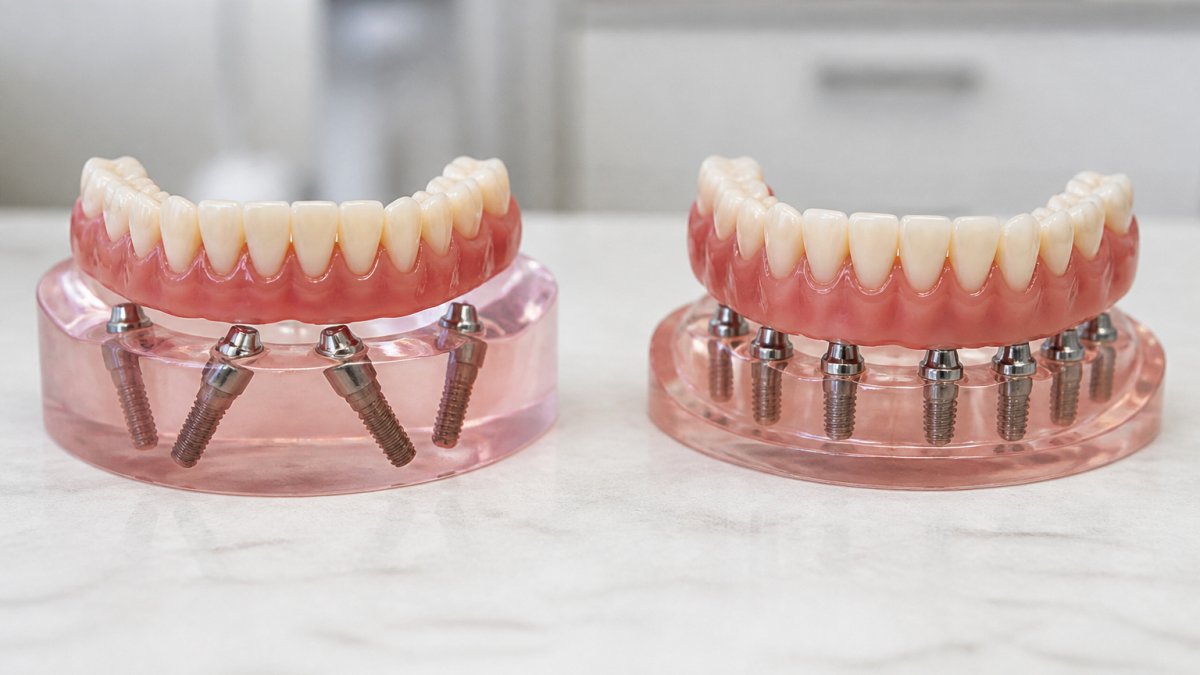
A single dental implant involves three distinct components, each billed separately by most providers. The implant post is the titanium screw surgically placed into the jawbone. The abutment connects the post to the final restoration. The dental crown is the visible tooth replacement seated on top.
When you get a quote, confirm whether it covers all three or just the surgical placement. Many advertised "low prices" reflect only the implant post, leaving patients surprised when the abutment and crown fees appear later.
Additional Procedures That Add to Your Out-of-Pocket Expenses
Several preparatory treatments can significantly increase your total out-of-pocket expenses:
Bone grafting: Required when the jawbone lacks sufficient density to support an implant post.
Sinus lift: Needed when upper back teeth are being replaced and the sinus cavity sits too close to the implant site.
Tooth extractions: If damaged teeth remain, they must be removed before implant placement.
Imaging and diagnostics: Cone beam CT scans and comprehensive oral exams are typically charged separately.
A common mistake is comparing quotes without knowing which procedures each estimate includes. Always ask for an itemized treatment plan before making any decision.
How to Find Affordable Dental Implants: A Step-by-Step Approach
Finding affordable dental implants comes down to a systematic process. The patients who get the best value treat this like a financial planning exercise rather than a simple purchase.

Step 1: Get Multiple Treatment Plans and Compare Pricing Transparently
Getting at least three detailed treatment plans from different providers is the single most effective step toward price transparency. Request itemized cost breakdowns, not just a total figure.
Component | Provider A | Provider B | Provider C |
Implant post | Quote separately | Quote separately | Quote separately |
Abutment | Included or separate? | Included or separate? | Included or separate? |
Crown | Included or separate? | Included or separate? | Included or separate? |
Bone graft (if needed) | Listed? | Listed? | Listed? |
Imaging/diagnostics | Listed? | Listed? | Listed? |
Total estimated cost | Full figure | Full figure | Full figure |
Price transparency is a legitimate quality signal. Providers who give clear, itemized estimates upfront tend to deliver fewer billing surprises later.
Watch Out Never accept a single-line "implant package" quote without a written breakdown. Hidden fees for abutments, crowns, or bone grafting can substantially increase your final bill after treatment has already begun.
Step 2: Check Dental Schools and Non-Profit Programs
Dental schools offer implant procedures performed by supervised dental students or residents, typically at significantly reduced fees. The tradeoff is time: procedures often take longer and require multiple appointments.
According to the American Dental Association's guidance on dental school clinics, dental school programs maintain rigorous safety standards and faculty oversight throughout every procedure. Non-profit dental programs and community health centers also provide reduced-cost or sliding-scale restorative dentistry services. The Health Resources and Services Administration's HRSA Find a Health Center tool can help locate federally qualified health centers near you.
The limitation: not all dental schools or community programs perform implant procedures. Complex cases involving bone grafting typically require specialist experience that training programs may not offer.
Step 3: Weigh the Risks of Medical Tourism
Medical tourism for dental implants, most commonly to Mexico, Costa Rica, or Eastern Europe, can appear to offer dramatic savings. The risks, however, are real:
No continuity of care: If complications arise after you return home, your local dentist must manage a procedure they didn't perform.
Variable material quality: Implant post and crown materials vary internationally, and verifying quality standards is difficult.
Travel costs erode savings: Multiple trips may be required for osseointegration monitoring and crown placement.
Legal recourse is limited: Pursuing a malpractice claim against a foreign provider is rarely practical.
Medical tourism works best for patients who have done extensive research and chosen a provider with verifiable credentials. For seniors or patients with complex medical histories, the risk calculus shifts significantly.
Dental Implant Financing Options That Make Treatment Manageable
Financing is where many patients find the most practical relief on the cost of dental implants without insurance.
Third-Party Financing and Interest-Free Payment Plans
Third-party financing companies offer payment installments structured specifically for dental work, typically ranging from six to twenty-four months with no interest if paid in full within the promotional period.
The critical detail: "interest-free" financing usually becomes high-interest if the balance isn't paid before the promotional period ends. When evaluating financing options:
Ask whether the provider charges fees to use third-party financing
Confirm the interest rate that applies after the promotional period
Check whether a credit check is required
Ask about in-house payment plans, which some practices offer directly

HSA, FSA, and Tax Deductions for Dental Implants
This is the angle most patients overlook entirely. Dental implants are considered a qualified medical expense under IRS guidelines, which means they're eligible for payment through a Health Savings Account or Flexible Spending Account.
According to IRS Publication 502 on medical and dental expenses, dental implants qualify as a deductible medical expense when they exceed the applicable threshold of your adjusted gross income. HSA and FSA accounts allow you to pay for implants with pre-tax dollars, effectively reducing your real cost by your marginal tax rate.
Pro Tip If you have an FSA, be aware of the "use it or lose it" rule. Timing your implant procedure to align with your FSA balance can maximize this benefit.
Does Dental Insurance Cover Implants? What to Expect
Most traditional dental insurance plans classify implants as a cosmetic or elective procedure and exclude them from coverage entirely. Some plans cover specific components, most commonly the crown, while excluding the implant post and abutment.
What to check before assuming your plan covers anything:
Review your Summary of Benefits for language around "implants" or "endosseous implants"
Ask your insurance company specifically whether the post, abutment, and crown are each covered
Confirm your annual maximum, since most dental plans cap total annual benefits at a level that may cover only a fraction of implant costs
Ask whether a waiting period applies to major restorative procedures
If you're purchasing a new dental plan specifically because you need implants, compare plans carefully. Some supplemental dental plans are designed to cover implants, though they typically carry higher premiums and may have waiting periods of twelve to twenty-four months.
Quality vs. Lowest Price: Why Provider Experience Matters
The cheapest implant quote is rarely the best value. Dental implant success depends heavily on the clinical experience of the oral surgeon or periodontist placing the implant. Osseointegration, the process by which the titanium post fuses with the jawbone, must be managed carefully. Implant failure requires surgical removal, additional bone grafting, and replacement, which costs far more than the original procedure.
Provider experience affects outcomes in concrete ways: accurate placement reduces the risk of nerve damage and implant failure, proper assessment of bone density prevents placing implants in sites that can't support them, and material selection affects longevity.
Key Takeaway The real cost of a dental implant includes the cost of failure. An implant placed by an experienced specialist that lasts 20+ years costs far less in total than a discounted implant that fails and requires replacement within five years.
Dental Implant Consultation Questions You Should Always Ask
Walk into every dental implant consultation with these questions prepared:
What does your quoted price include? Ask specifically about the post, abutment, crown, and any preparatory procedures.
Do I need bone grafting or a sinus lift? Request imaging review before accepting any quote.
What implant system do you use, and why? Established implant systems have longer clinical track records.
What is your success rate for implant procedures? Experienced providers track this.
What happens if the implant fails? Ask about their warranty or revision policy.
What financing or payment plan options do you offer? Confirm interest-free availability and terms.
Are you an oral surgeon, periodontist, or general dentist? Understand who is placing the implant and their specific training.
How many implant procedures have you performed? Volume matters for complex cases.
Price transparency during consultation is a quality signal. Providers who answer these questions clearly are demonstrating the kind of patient-focused practice that produces better outcomes.
Long-Term Maintenance Costs and the Real Value of Affordable Dental Implants
Affordable dental implants aren't just about the procedure cost. Dental implants, when properly placed and maintained, can last decades. The maintenance requirements are straightforward: regular professional cleanings, routine dental exams, and consistent home oral hygiene.
Compare this to the ongoing costs of alternatives: dentures typically require relining and eventual replacement every several years, dental bridges require replacement and can compromise adjacent healthy teeth, and neither alternative eliminates bone loss in the jaw the way an implant post does.
The long-term value of affordable dental implants, when placed correctly, is that they're the last restoration most patients will ever need for that tooth. Ask your chosen provider to show you patient outcomes and documented success rates. Ask how long the practice has been placing implants and what their follow-up protocol looks like.
Finding affordable dental implants requires financial planning, provider research, and a clear understanding of what you're actually comparing across quotes. Royal Dental at The Villages has been helping patients navigate this process for over 30 years, offering same-day implant options, full-mouth restoration, and a 10% new patient discount on dental work and implants. Our team handles everything in one place, from initial consultation through final restoration, so you're never bouncing between specialists. Contact us to schedule a consultation and get a fully itemized treatment plan with no surprises.
Frequently Asked Questions
What is the least expensive way to get dental implants?
The most cost-effective path to affordable dental implants combines several strategies: asking about new-patient discounts, using HSA or FSA funds, enrolling in interest-free financing plans, and requesting a full cost breakdown during your consultation. Dental schools supervised by licensed oral surgeons and periodontists can also offer reduced fees. Avoid decisions based solely on the lowest price, provider experience and success rate directly affect long-term outcomes and whether you avoid costly revisions.
How can I find dental implant financing options?
Most dental practices offer third-party financing through companies that provide payment installments, sometimes with interest-free options for qualifying patients. Ask your provider directly about in-house payment plans as well. HSA and FSA accounts can cover implant costs as qualified medical expenses under IRS guidelines. Some practices, like those offering new-patient discounts, reduce your upfront out-of-pocket expenses immediately. Always ask whether a credit check is required and what the total repayment amount will be before signing any financing agreement.
Do dental insurance plans typically cover implants?
Most traditional dental insurance plans classify implants as a cosmetic or elective procedure and provide limited or no coverage for the implant post itself. Some plans cover portions of the dental crown or abutment under restorative dentistry benefits. Supplemental dental plans and Medicare Advantage plans vary widely. Review your Explanation of Benefits carefully and ask your provider's billing team to submit a pre-authorization request so you know exactly what your dental insurance coverage will pay before treatment begins.
What questions should I ask during a dental implant consultation?
Ask for a complete cost breakdown covering the implant post, abutment, dental crown, and any bone grafting or sinus lift procedures. Request the provider's clinical experience and success rate with implants. Confirm whether the practice handles everything in one location or refers you to outside specialists. Ask about financing plans, what happens if something needs adjustment after placement, and whether same-day implant options are available. Getting clear answers to these questions before committing protects both your dental health and your budget.
Inquiry Services Page
This article was written using GrandRanker


Comments